Extras
- Syllabus 2008
- SQ: Introduction
- SQ: Promise
- SQ: Innocence
- Quizzes
- Notes for Reference
- Editor Notes
- Class Notes
- Article: THEME OF THE BIBLE by Tom L. Ballinger
- Article: THE FOUNDATIONS OF DISPENSATIONAL TRUTH. by E.W. Bullinger
- Article: SUMMARY OF THE DIVINE PLAN by S. Van Mierlo
- Study: How Long was the Dispensation of Promise?
- Article: The Gap Theory by Bert Thompson Ph.D.
- HW: Explanation of the Seven Dispensations
Syllabus 2008
Deliverance Bible Institute 2008-09
DISPENSATIONAL TRUTH
Syllabus
IMPACT ON FINAL GRADE
Attendance 20%
Assignments 10%
Study Questions 30%
Quizzes 30%
Final Exam 10%
Active Participation 5% bonus (maximum)
Course Calendar
Oct 15 Week 1 Pages 1-3
22 Week 2 Pages 1-3
29 Week 3 Pages 4, 5
Nov 5 Week 4 SQ1 due
12 Week 5 Q1 due
19 Week 6
<<<NOVEMBER 22 thru December 1 – THANKSGIVNG VACATION>>>
Dec 3 Week 7
10 Week 8 SQ2 due
17 Week 9 Q2 due
<<<DECEMBER 20 THRU JANUARY 5 – CHRISTMAS VACATION>>>
Jan 7 Week 10
14 Week 11
21 Week 12 SQ3 due
28 Week 13 Q3 due
Feb 4 Week 14
11 Week 15 SQ4 due
<<<FEBRUARY 14 thru 23 VACATION>>>
25 Week 16 Q4 due
Mar 4 Week 17
11 Week 18 SQ5 due
18 Week 19 Q5 due
Mar 25 Week 20
April 1 Week 21
<<<April 4 thru 13 VACATION>>>
15 Week 21 SQ6 due
22 Week 22 Q6 due
29 Week 23
May 6 Week 24
13 Week 25
20 Week 26 SQ7 due & Q7
27 Week 27 FINAL EXAM / ALL ASSIGNMENTS DUE
SQ: Introduction
Study Questions 1: Introduction
-
What is a dispensation? A dispensation is a period of time during which man is tested in respect to obedience to some specific revelation of the will of God.
-
How many dispensations are there? There are seven dispensations.
-
Name the dispensations.
-
Dispensation of Innocence
-
Dispensation of Conscience
-
Dispensation of Human Government (Self-will)
-
Dispensation of Promise
-
Dispensation of Law
-
Dispensation of Grace
-
Dispensation of Righteousness)
-
What are the three main periods of history?
-
Antediluvian Age
-
Present Age
-
Age to Come
-
What is an age? An age is the period of time from one marked or violent change in the earth to another marked change involving the earth’s inhabitants.
-
Name the seven phases of the earth.
-
Original Earth
-
Chaotic Earth
-
Edenic Earth
-
Antediluvian Earth
-
Present Earth
-
Millennial Earth
-
New Heaven and New Earth
-
What does the Hebrew word “tohuw” mean? to lie waste; a desolation (of surface), i.e. desert; figuratively, a worthless thing; adverbially, in vain:--confusion, empty place, without form, nothing, (thing of) nought, vain, vanity, waste, wilderness.
-
What does the Hebrew word “bohuw” mean? (meaning to be empty); a vacuity, i.e. (superficially) an ndistinguishable ruin:--emptiness, void
-
Give scripture to prove the triunity of God. I John 5:7; Matthew 3:17; John 5:19; John 14:26; John 15:26
-
Using something from creation, illustrate the triunity of God? i.e., The Universe – Space, Matter, Time
-
What are the three themes to God’s eternal purpose?
-
Revelation
-
Redemption
-
Realization
-
What are the three ministries of the Son?
-
The ministry of Prophet
-
The ministry of Priest
-
The ministry of King
-
Tell what God did on the first day of Re-Creation. God created light – Genesis 1:3-5
-
Tell what God did on the third day of Re-Creation. God created Dry land, Vegetation
-
Tell What God did on the sixth day of Re-Creation. Created the Animals and Man.
SQ: Promise
Study Questions 5: Promise
-
What period of time did the Dispensation of Promise cover? The Dispensation of Promise covered from the call of Abraham to the Exodus.
-
How long a period of time did this Dispensation of Promise cover? The Dispensation of Promise was 430 years long.
-
From where did this dispensation get its name? The Dispensation of Promise got its name from the promise made to Abraham and his seed.
-
What did God do to the people at Babel? God confused the people at Babel with different languages that they could not understand.
-
Into what did the people change the incorruptible God? They changed the incorruptible God into an image made like corruptible man, and to birds, and four-footed beasts, and creeping things.
-
What kind of worship was common in Chaldea and Egypt? Serpent worship was common in Chaldea and Egypt.
-
What is another name for this dispensation? Another name for this dispensation is the Patriarchal Dispensation.
-
What did God refer to Abraham as? God referred to Abraham as His friend.
-
What are the three religions that Abraham is considered to be the father of? The Jewish Religion – Isaac The Mohammed Religion – Ishmael The Christian Religion – through Christ (through the seed of Abraham)
-
Where did Abraham live when God called him? Abraham lived in Haran.
-
What do we know of the city and their religious background? We know that it was a heathen background and that they worshipped the moon god.
-
What was God’s command to Abraham? God’s command to Abraham was “Get you out of your father’s country”.
-
What did God promise if Abraham would obey? “I will bless thee”
-
What were the two symbols that Abraham was known for? An alter A tent
-
What is said of the Jew in regards to history? It is said of the Jew that they are the miracle of history.
-
What is the land of Canaan known as? The land of Canaan is known as a land bridge between the north and the south.
Study Questions 5: Promise, continued 17. What is the size of Canaan? Canaan is from Dan to Beersheba – 155 miles long, 55 miles wide.
-
What were the two seasons? The two seasons were a wet and dry season (early and the latter rains).
-
What were the three promises of the Abrahamic Covenant? A. Seed shall be as dust of the earth B. Stars of the sky C. Father of many nations
-
How old was Abraham when Isaac was born? Abraham was a hundred years old when Isaac was born.
-
What was Sarah’s reaction to the promise of a son? Sarah laughed.
-
What does Isaac mean? Isaac means laughter.
-
Who did Abraham send to get a wife for his son? Abraham sent his servant
-
What was the girl’s name? Rebecca
-
What did her name mean? To ensnare by beauty
-
How old was Isaac when he married Rebecca? Isaac was forty years old.
-
What was unusual about Rebecca being with child? That she was with twins; which were in essence two nations in her womb.
-
What are the meanings of her son’s names? Esau – means hairy, rough, red Jacob – means heal holder, supplanter, trickster
-
Who is Joseph a type of? Joseph is a type of Christ.
-
What are the 6 steps to the Throne for Joseph and, spiritually speaking, for us? A. Resistance of evil B. Divinely favored C. Providential circumstances D. Honored God E. Divine revelation F. Exalted to the throne
-
What did the Dispensation of Promise end in? The Dispensation of Promise ended in Judgment.
SQ: Innocence
Study Questions 2: Innocence
-
What was the first Dispensations? The Dispensation of Innocence was the first dispensation.
-
What period of time does the Antediluvian Age cover? The Antediluvian Age covers from the Re-creation of the earth to the flood.
-
What period of time does the first Dispensation cover? The Dispensation of Innocence covers from the creation of Man to the expulsion from the Garden.
-
What state was man created in? Man was created in Innocence.
-
What was man commanded to do in Genesis 1:28? Man was commanded to …Be fruitful, and multiply, and replenish the earth, and subdue it: and have dominion over the fish of the sea, and over the fowl of the air, and over every living thing that moveth upon the earth… in Genesis 1:28.
-
What was the environment the man was in? It was a perfect environment.
-
What does Eden mean in Hebrew? pleasure:--delicate, delight, pleasure. See also 1040.
-
What was man commanded to do to the garden? Man was commanded …to dress it and to keep it…
-
What was man tested on? Man was tested on obedience to not eating of the tree of knowledge of good and evil as the Lord commaned.
-
What is the meaning of Free Moral Agent? The meaning of the term “free moral agent” is the right to choose.
-
What was the source of the temptation? Satan was the source of the temptation.
-
What does Satan use lies to do? Satan uses lies to deceive us.
-
What were the three areas of temptation? A. “The lust of the flesh” B. “The lust of the eye” C. “The pride of life” Study Questions 2: Innocence, continued
-
How did Jesus overcome the temptation? Jesus overcame the temptation by the written word.
-
What was Satan’s purpose in the temptation? Satan’s purpose in the temptation was to spoil God’s purpose in the creation of man to repopulate the earth with a holy race.
-
What was destroyed in man in yielding to the temptation? Their innocence was destroyed in yielding to the temptation.
-
What makes innocence righteousness? The test makes innocence righteousness.
-
What did man become conscious of when he failed the test? When man failed the test he became self-conscious, and aware of his sin.
-
What did the first Dispensation end in? The First Dispensation (Innocence) ended in judgment and expulsion.
-
What was the Edonic Dispensation characterized by? The Edenic Dispensation was characterized by the absence of sin & the presence of God.
BONUS: What can we conclude after man sinned while enjoying a state of utter innocence and a perfect environment? Innocence and a perfect environment are not enough of a safe-guard to prevent sin. Man’s needs the grace of God to overcome sin.
Quizzes
Quiz 1: Introduction
-
What is a dispensation? A dispensation is a period of time during which man is tested in respect to obedience to some specific revelation of the will of God.
-
How many dispensations are there? There are seven dispensations.
-
Name the dispensations.
-
Dispensation of Innocence
-
Dispensation of Conscience
-
Dispensation of Human Government (Self-will)
-
Dispensation of Promise
-
Dispensation of Law
-
Dispensation of Grace
-
Dispensation of Righteousness)
-
What are the three main periods of history?
-
Antediluvian Age
-
Present Age
-
Age to Come
-
What is an age? An age is the period of time from one marked or violent change in the earth to another marked change involving the earth’s inhabitants.
-
Name the seven phases of the earth.
-
Original Earth
-
Chaotic Earth
-
Edenic Earth
-
Antediluvian Earth
-
Present Earth
-
Millennial Earth
-
New Heaven and New Earth
-
Give scripture to prove the triunity of God. I John 5:7; Matthew 3:17; John 5:19; John 14:26; John 15:26
-
Using something from creation, illustrate the triunity of God? i.e., The Universe – Space, Matter, Time
-
What are the three themes to God’s eternal purpose?
-
Revelation
-
Redemption
-
Realization
-
What are the three ministries of the Son?
-
The ministry of Prophet
-
The ministry of Priest The ministry Quiz 2: Innocence
-
What period of time does the Antediluvian Age cover? The Antediluvian Age covers from the Re-creation of the earth to the flood.
-
What period of time does the first Dispensation cover? The Dispensation of Innocence covers from the creation of Man to the expulsion from the Garden.
-
What state was man created in? Man was created in Innocence.
-
What does Eden mean in Hebrew? pleasure:--delicate, delight, pleasure. See also 1040.
-
What was man tested on? Man was tested on obedience to not eating of the tree of knowledge of good and evil as the Lord commaned.
-
What is the meaning of Free Moral Agent? The meaning of the term “free moral agent” is the right to choose.
-
What was the source of the temptation? Satan was the source of the temptation.
-
What were the three areas of temptation?
A. Lust of the flesh”
B. Lust of the eyes
C. Pride of life
-
What was destroyed in man in yielding to the temptation? Their innocence was destroyed in yielding to the temptation.
-
What did the first Dispensation end in? The First Dispensation (Innocence) ended in judgment and expulsion.
-
What was the Edonic Dispensation characterized by? The Edenic Dispensation was characterized by the absence of sin & the presence of God.
Quiz 3: Conscience
-
What period of time did the Dispensation of Conscience cover? The Dispensation of Conscience covered from the expulsion from Eden to the Flood.
-
What did man lose as a result of his fall? Man, lost as a result of his fall, his “God-consciousness”.
-
Why could not the conscience keep man from doing wrong? The conscience could not keep man from doing wrong because the conscience imparts no power.
-
What is the meaning of the names Cain, Abel and Seth? Cain – means acquired or getting Abel – means vapor or vanity Seth – means appointed or replacing
-
What were the sacrifices that Cain and Abel offered? Cain offered a sacrifice of fruit and Abel offered a sacrifice of blood.
-
Why did Satan want to destroy Abel? Satan wanted to destroy the Promised Seed.
-
What does knowledge without God produce? Knowledge without God can only produce a “god-less” civilization.
-
What rule was Enoch an exception to? Enoch was an exception to the rule of death.
-
What does Enoch mean? Enoch means dedicated, instructed, disciplined, initiated, acquainted with mystery or secrets.
-
What is Enoch a type of? Enoch is a type of the Bride – Overcomer.
-
What is Methuselah a type of? Methuselah is a type of the Church.
-
What is Noah a type of? Noah is a type of the saved, preserved through Judgment.
-
Who are the Sons of God referred to in Gen. 6:2? The “sons of Seth”, possibly possessed by demons.
-
What was God’s reaction to this godless civilization? God’s reaction to this godless civilization was repented, grieved, and I will destroy.
-
What did the Dispensation of Conscience end in? The Dispensation of Conscience ended in judgment. Quiz 4: Human Government
-
What period of time did the Dispensation of Human Government cover? The Dispensation of Human Government covered from the flood to the dispersion of Babel.
-
What was God’s command after the Flood? God’s command after the flood was to “Go forth from the ark” and “Be fruitful and multiply”.
-
What was Noah’s first act upon leaving the Ark? Noah’s first act upon leaving the Ark was that he “built an alter unto the Lord”.
-
What was the covenant that God made with Noah? The covenant that God made with Noah was – That He would not destroy the earth again with a flood.
-
What was the sign of the covenant? The sign of the covenant was a rainbow.
-
Under Human Government what could man now eat? “Every moving thing that liveth shall be meat for you” was what man could now eat.
-
What was man forbidden to eat? Blood was forbidden to be eaten.
-
What did Noah do after he planted a vineyard? Noah became drunken after he planted a vineyard.
-
What does this prove concerning man governing himself? This proves that man cannot govern himself.
-
What was the curse put upon Canaan? The curse was that Canaan was to be a servant.
-
Who were the sons of Ham? The sons of Ham were Cush, Mizraim, Phut, and Canaan.
-
Who was Japheth the father of? Japheth was the father of the Gentiles.
-
Who was Shem the father of? Shem was the father of Elam, Asshur, Arphaxad, Lud, and Aram.
-
What happened to the earth after the flood? After the flood the earth was divided into nations.
-
What did the Dispensation of Human Government end in? The Dispensation of Human Government ended in judgment.
Quiz 5: Promise
-
What period of time did the Dispensation of Promise cover & how long was it? The Dispensation of Promise covered from the call of Abraham to the Exodus.
-
Into what did the people change the incorruptible God? They changed the incorruptible God into an image made like corruptible man, and to birds, and four-footed beasts, and creeping things.
-
What is another name for this dispensation? Another name for this dispensation is the Patriarchal Dispensation.
-
What are the three religions that Abraham is considered to be the father of? The Jewish Religion – Isaac The Mohammed Religion – Ishmael The Christian Religion – through Christ (through the seed of Abraham)
-
What do we know of Haran and its religious background? We know that it was a heathen background and that they worshipped the moon god.
-
What was God’s command to Abraham? God’s command to Abraham was “Get you out of your father’s country”.
-
What is said of the Jew in regards to history? It is said of the Jew that they are the miracle of history.
-
What were the three promises of the Abrahamic Covenant? A. Seed shall be as dust of the earth B. Stars of the sky C. Father of many nations
-
How old was Abraham when Isaac was born? Abraham was a hundred years old when Isaac was born.
-
What does Isaac mean? Isaac means laughter.
-
What was unusual about Rebecca being with child? That she was with twins; which were in essence two nations in her womb.
-
What are the meanings of Rebecca’s sons’ names (Jacob & Esau? Esau – means hairy, rough, red Jacob – means heal holder, supplanter, trickster
-
Who is Joseph a type of? Joseph is a type of Christ.
-
What are the 6 steps to the Throne for Joseph and, spiritually speaking, for us? A. Resistance of evil B. Divinely favored C. Providential circumstances D. Honored God E. Divine revelation F. Exalted to the throne
-
What did the Dispensation of Promise end in? The Dispensation of Promise ended in Judgment.
Quiz 6: Law: Division I
Quiz 7: Law: Division II
Quiz 8: Law: Divsions III & IV
Quiz 9: Grace & Righteousness FINAL EXAM What is a dispensation? Name the dispensations. What are the three themes to God’s eternal purpose? What period of time did the Dispensation of Conscience cover? Why did Satan want to destroy Abel? What is Enoch a type of? What was Noah’s a type of?
Notes for Reference
Addendum
Original Creation to Recreation
Original Creation to Recreation
Gen. 1:1—In the beginning God created the heaven and the earth. 2 And the earth was without form, and void; and darkness was upon the face of the deep. And the Spirit of God moved upon the face of the waters.
Most Young Earth creationist organizations reject the gap theory, and say it is unscriptural, unscientific, and not necessary, in its various forms. YECs assert that the entire universe is only 6-10 thousand years old.
Neh. 9:6 Thou, even thou, art LORD alone; thou hast made heaven, the heaven of heavens, with all their host, the earth, and all things that are therein, the seas, and all that is therein, and thou preservest them all; and the host of heaven worshippeth thee. Col 1:16 For by him were all things created, that are in heaven, and that are in earth, visible and invisible, whether they be thrones, or dominions, or principalities, or powers: all things were created by him, and for him:
Job 38:6 Whereupon are the foundations thereof fastened? or who laid the corner stone thereof; 7 When the morning stars sang together, and all the sons of God shouted for joy?
- The Chaotic Earth - Gen. 1:2
(1) Scripture speaks of angels and authorities Rom. 8:38-39; Eph.1:21; 3:10; 6:12; Col 1:16; 2:15; I Peter 3:22 Original creation was inhabited
Lucifer was its ruler Isa. 14:12-16 Eze. 28:11-17
He was created - vs. 15 He was anointed - vs. 14 He was perfect - vs. 15 His sin - Pride Eze. 28:17 Isa. 14:12-13 The effects of Lucifer’s sin - Rev. 12:4-9
(2) In Judging Lucifer God judged his kingdom Gen. 1:2 The Word “was” “Hyah” “became” “Tohu and Bohu” Jer 4:23
Refutations to Ruin and Reconstruction Theory
Refutations of ‘The Gap Theory’ or ‘Ruin & Reconstruction Theory’
- Genesis 1:28 “Be fruitful, and multiply, and replenish the earth, and subdue it:”
ARGUMENT: “RE-plenish means to fill AGAIN. This suggests it WAS full, then emptied and now needing to be filled AGAIN.”
Refutation: The Hebrew word here is male’. It is found in 240 verses. In all of these uses the emphasis of the word is to relay the thought of ‘making full’ or ‘wholly (completely)’ and not necessarily to make full again. (That is to say, it is not the ONLY way to translate the word.) EXAMPLES: Gen. 42:25 Then Joseph commanded to fill their sacks with corn, and to restore every man's money into his sack, and to give them provision for the way: and thus did he unto them.
Gen. 24:16 And the damsel was very fair to look upon, a virgin, neither had any man known her: and she went down to the well, and filled her pitcher, and came up.
Ex. 1:7 And the children of Israel were fruitful, and increased abundantly, and multiplied, and waxed exceeding mighty; and the land was filled with them.
Job 15:2 Should a wise man utter vain knowledge, and fill his belly with the east wind?
GODHEAD
THEIOS - Acts 17:29; 2 Pt. 1:3,4 The Godhead; THE ONE TRUE GOD Used instead of Theos purposely---(general: a god, or diety; not as strong a term)
THEIOTES - Romans 1:20 → the attributes of God; His Divine Nature and Properties
How much of God can be known from the revelation of Himself which may be known from the revelation of Himself which men may everywhere trace in the world around them. It is not the ‘personal God’ which men may know by these aids. He can be known only by the revelation of Himself in His Son. Hence:
THEOTES Col. 2:9 → The Divine Essence of God; personality of God
In the Son dwells the fullness of absolute Godhead (not temporally, not FILLED with, but was, is and always will be GOD
Characteristics of The Devil Gen. 3:1-5
-
Subtle- Vs. 1 Cunning -Crafty -Artful -Sly Treacherous -Operating secretly - Tricky -Slippery -II Cor. 11:3 Concealed himself ~ used a serpent
-
Tempter -Vs. 1
"Said unto the woman" Tempted the woman when alone. Matt.4:3 I Thess. 3:5
- Seducer -Vs. 1
"Yea, hath God said, he shall not eat of every tree of the garden?" I Chron. 21:1 Acts 5:3
- Deceiver -Vs. 1
"Ye shall not eat of every tree" II Cor. 11:3 E hp. 4:14 Rev. 12:9
- Liar -Vs. 4
"Ye shall not surely die" John 8:44
- Slanderer -Vs. 5
"For God doth know" Job 1:9-11 Rev. 12:10
- Thief -Vs. 6
"And when the woman saw" Matt. 13:19 John 10:10
The Ancient View of Early Antiquity
Early literate civilizations generally looked back to antiquity as the "golden Age," and thought of their own era as decadent.
-
The ancient Egyptians mention their first historical epoch as the time: the gods ruled upon the earth.
-
The Chinese refer to the years before their great flood as when man reached his greatest perfection.
-
The sages of India thought of history in terms of four ages: the first of these, the Krita age, was the most glorious—when man knew no disease and lived for 400 years; the next two ages showed a steady degeneration from this time; then came the flood and after it this present age of Kali, the darkest time of human existence.
-
The Greeks, too, perceived human history in terms of four ages: the best of these, the "Golden Age," ended when the: first woman, Pandora, opened the forbidden box; the following, ages of Silver and Bronze showed a steady worsening of the human condition; then came the flood and this present era.
FIND PLACE F OR NOTES:
- Dispensation of Innocence - Edenic Covenant Gen. 1:1-3:24 God created man perfect and in His own image. God deals with man as a perfect infant—untested, but perfect still the same. Sin had not entered the world and so man for the first and last time was initially innocent.
- Dispensation of Conscience - Adamaic Covenant Gen. 4:1-8:19 God deals with man in the Dispensation of Conscience by his conscience. Everyone is born with a conscience which is not a curse but the providence of God at work. God has placed within man the awareness of what is right or wrong, of acts and motives then God holds man responsible to his conscience.
- Dispensation of Human Government-Noahaic Covenant Gen.8:20-11:32 Man left to himself will self destruct, because of his carnal nature he is very heavily driven by his flesh and emotions, and so for a guiding force, God instituted human government. This did not replace man’s responsibility to God, but was to serve as a lower court of sorts. Man is ultimately responsible to God.
- Dispensation of Promise- Abrahamic Covenant Gen. 12:1-Ex. 12:10 In God’s dealing with man we see a new method, not replacing any before this point, but a step higher and closer to an intimate relationship being restored between God and man. God, Who owes no one anything, but in Him all things have their existence and by Him ALL things are made, The Lord is the One making covenants and promises with believers.
- Dispensation of Law- Mosaic Covenant Ex. 19:1-Matt. 1:1-25 The Dispensation of Law is clearly as vital to the perfect plan of God as the others, and yet the law is most often despised. The Law is rigid and unbending, and this is the narrow picture most have of God. The law though was not the full plan of God, but was as a Tutor “School Master” (Galatians 3:24) to teach man what God is expecting of man. Before we have the “What” (to know) but in the dispensation of Grace, God gives man the “How”(the enablement). (Romans 8:3)
- Dispensation of Grace- New Testament Covenant Matt. 28:1-10 Eph:2:8; 4:13; I John 3:2; Rev. 4:1-4 Man is incapable of equaling the balances with the character and nature of Christ without the Holy Ghost. Eph. 3:11; It is God’s Eternal Purpose to have a people that would see from God’s point of view and act, think and be like God’s Son. Gal.4:7; Eph.4:13; Rom.8:17; Heb.2:10; 2Cor. 3:18 “are changed into the same image from glory to glory, even as by the Spirit of the Lord” I Pt. 5:10; God has given man Grace—God’s Riches At Christ’s Expense—to do the work in man. God is working the change in man by his grace, and if man should fall, by God’s grace he can have peace with God restored through faith. (Romans 5:1)
- Dispensation of Righteousness - Kingdom Covenant Rev. 22:1-21 Here is where the final purpose in the plan of God is fulfilled, where righteousness reigns in man and not sin. God is going to work a complete work in us. The New Heaven and New Earth is only the backdrop to the goal and heart of God—fellowship completely restored. God is a holy God and cannot and will not fellowship with sin, but God in his infinite love and knowledge has made a way for us to enter into a place of unrestricted communion with Him separate from sin.
The Seven Tests of the Dispensations Test - Failure - Judgment
-
The First dispensation,( Gen.1:1-3:24) of innocence was with one specific test; do not touch the tree of knowledge of good and evil. a. 1:28- Be fruitful, and multiply, and replenish the earth, and subdue it: and have dominion--- Rule over all creatures and the earth. b. 1:29 “every herb bearing seed… to you it shall be for meat”. c. 2:15 God put Adam in the “garden of Eden to dress it and to keep it”. d. 2:16 Man may eat of all trees in the Garden - (but one). e. 2:17 Man MUST NOT eat of the Tree of Knowledge of good and evil. f. 2:24-25 Man and wife must work together as one.
-
The Second dispensation,( Gen. 4:1-8:19) of Conscience was with the added test to obey your conscience. The specific test which all had to pass was two-fold. a. Must obey your conscience of right and wrong, good and evil. b. Acceptable blood sacrifices offered by faith for true worship.
-
The Third Dispensation, ( Gen. 8:20-11:32) of Human Government was with the test be fruitful and multiply and replenish the earth and he failed. God’s rule demonstrated that mankind would not obey God on a threefold basis a. The human conscience b. Restraint of lawlessness by the Holy Ghost striving against sin.
-
Abraham’s prayer and witnessing
-
God’s Judgment on sinful people and cities c. Human government, man would not be able to judge himself properly..
-
The fourth dispensation, (Gen. 12:1- 18:27) of Promise is with a test to believe for the Promised Son. God’s special dealing with Abraham is made evident in Gal.3:15-22; Heb.6:13-15 A principle is a ruling factor if it makes a difference in the way people live. God intended His promises to Abraham and his seed to make a difference in the way that they would live. Hebrews 11:8-30 demonstrates the fact that God’s promises did make a difference in the lives of Abraham and his seed. a. The human conscience b. The restraint of lawlessness through the Holy Ghost striving once again against sin. c. Human government d. Plus the Promises of God to Abraham The fourth dispensation is distinct from the third by adding the promises to Abraham’s conscience. I. The special revelation God gave to Abraham and his seed in the fourth dispensation is in Genesis 12:2-3; 13:14-17; 15; 17:1-22; 22:16-18.
-
God made personal promises to Abraham. He would bless him, make his name great, give him many physical descendants, make him the father of many nations, give him the land of Canaan for an everlasting possession, and bless those who would bless him and curse those who would curse him .
-
God made national promises concerning Israel. He would bring Israel into existence as a nation and make it great, give Israel the land of Canaan forever, and establish the Abrahamic Covenant with the nation as an everlasting covenant. 3.`God also made a universal promise. He would give blessing to all the families of the earth through Abraham’s seed. (Messiah-Redeemer-The Promised Seed)
II. The responsibility of Abraham and his seed in the fourth dispensation was a test to obey God on a fourfold basis of the human conscience, Abram and his descendants failed the test; they disobeyed God as the result of lapses of faith concerning the fulfillment of His promises. Abram fathered Ishmael through Hagar, because he failed to believe God’s promise to give him a son through Sarah, his wife. Twice he lied concerning his wife. Isaac lied concerning Rebekah, his wife. Jacob was a great deceiver. The Jews did not return from Egypt to Canaan after the famine of Joseph’s time ended. They forgot their destiny was related to the promised land of Canaan rather than Egypt. This failure brought divine judgment to the Jews they have continued to have problems with Ishmael’s descendants. Through time they were subjected to slavery and threatened with extinction in Egypt.
- The fifth dispensation of Law Ex19:1;Mt.27:56;Mk15:4;Lk.23:49;Jn.19:30 Extended from the giving of the Mosaic Law at Mount Sinai to the death of Jesus Christ on the cross at Mount Calvary and rent veil. The fifth dispensation had five ruling factors which God used to governed Israel: a. The Human conscience b. The restraint of lawlessness by the Holy Spirit, c. Human government, d. The Promises of God e. plus the Mosaic Law. The central core of the Mosaic Law (the ten commandments) was written on tables of stone. The Law inflicted external penalties upon those who broke its precepts. The Mosaic Law was a totally external way of God administering His rule over Israel (it should be noted that God gave the Mosaic Law exclusively to Israel, not to the Gentiles—see Romans 2:14 and 9:4). Thus, the Apostle Paul declared that the Mosaic Law functioned as (an external moral restrainer, Galatians 3:23-25).
The special revelation that God gave to Israel for the fifth dispensation is recorded in Exodus 20 through Deuteronomy. It consisted of the Mosaic Law with its 613 commandments. These gave in detail God’s will for the moral, civil, and ceremonial aspects of Israel’s life. The test would be for them to obey God on a fivefold basis. The people of Israel failed the test of the fifth dispensation. They broke the Mosaic Law repeatedly Jer. 31:32; Ez 16. God told them that they had a heart of stone (Ezekiel 36:26; Zechariah 7:12). This failure brought God’s judgment upon Israel. The nation suffered many judgments during the fifth dispensation. Among the worst were the Assyrian and Babylonian captivities, the Greek and Roman oppressions, Israel’s temporary removal from its place of blessing (Romans 11), and its worldwide dispersion as the result of its rejection of Christ. Ex 19:1-8; 2K 17:1-18; 25:1-11; Ac 2:22-23;7:51-52; Ro3:19-20;10:5; Gal3:10
The Usage Of The Word For Dispensation In The New Testament The word oikonomia appears nine times in the New Testament. In six of these appearances (Luke 16:2-4; 1 Corinthians 9:17; Ephesians 3:2; Colossians 1:25) it is translated stewardship or dispensation and refers to a responsible office or ministry entrusted to one’s care by a higher authority. In the other three appearances (Ephesians 1:10; 3:9; 1 Timothy 1:4) it is translated dispensation, fellowship, and edifying in the King James Version and administration in the New American Standard Bible. In these three passages it refers to a particular way of God administering His rule over the world. Ephesians 1:10 is of special interest, because it appears to refer to the particular way that God will administer His rule over the world in the future Millennium (the Millennial Dispensation). Ephesians 3:9 and 1 Timothy 1:4 refer to the particular way that God administers His rule now (the present dispensation). A Definition Of The Term Dispensation As It Relates To Dispensational Theology In light of the usage of the word for dispensation in the New Testament, the term dispensation as it relates to Dispensational Theology could be defined as follows: a dispensation is a particular way of God administering His rule over the world as He progressively works out His purpose for world history. Essential Characteristics Of Each Dispensation In order for each dispensation to be distinct from all other dispensations, it must have three essential characteristics. First, it must have a particular way of God administering His rule. Each dispensation is characterized by a unique ruling factor or combination of ruling factors. Second, it must involve a particular responsibility for man. Each dispensation makes mankind responsible to obey God in accordance with the dispensation’s unique ruling factor or combination of factors. Third, it must be characterized by divine revelation which had not been given before. In order for mankind to know God’s new way of ruling and the new responsibility, mankind must have these things revealed to it. Thus, each new dispensation requires new revelation from God The Apostle Paul indicated that the present dispensation is definitely related to new revelation which God gave to the apostles and New Testament prophets (Ephesians 3:2-10). Secondary Characteristics Of Each Dispensation The fact that each new dispensation involves a newly revealed responsibility for mankind indicates that each dispensation also has three secondary characteristics. First, each dispensation applies a test to mankind. The nature of the test is whether or not mankind will perfectly obey God’s rule by fulfilling the responsibility which is characteristic of that dispensation. Second, each dispensation demonstrates the failure of mankind to obey the particular rule of God which characterizes that dispensation. Third, each dispensation involves divine judgment because of mankind’s failure
DISPENSATIONAL THEOLOGY (Lewis S. Chafer, John Walvoord, Tim LaHaye, John Nelson Darby, C.I. Scofield) COVENANT THEOLOGY (Charles Hodge, Loraine Boettner, Louis Berkhof, John Murray, B.B. Warfield)
-
May be Arminian or modified Calvinist. Usually 5-point. . 2.Accepts 'normal' interpretation of the Bible text (allows both literal and figurative)
-
Almost always accepts the idea of The "Analogy of Faith."
-
"Israel" may mean either literal, physical descendants of Jacob or the figurative, spiritual Israel, depending on context.
5. "Israel of God" in Gal. 6:16 means spiritual Israel, parallel to Gal. 3:29; Rom. 2:28-29 , 9:6; Phil. 3:3.
6. God has gradually developed His people. . 7. The Church was born at Pentecost The Church began in prophecy O. T. (Acts 7:38) and reached fulfillment in the N. T.
8. There are many O. T. prophecies of the N. T. Church.
9. Some O. T. prophecies are for the literal nation of Israel, others are for spiritual Israel.
10. God's main purpose in history is Christ and secondarily the Church.
11. The Church is the culmination of God"s saving purpose for the ages.
12. The main heir to Abraham"s covenant was Christ and spiritual Israel.
13. The eternal Covenant of Redemption was within the Trinity to effect election.
14. God made a conditional Covenant of Works* with Adam as representative forall his posterity.
15. God made a Covenant of Grace with Christ and His people, including Adam.
16. Israel was right to accept the Covenant Mt. Sinai.
17. The "New Covenant" of Jer. 31 is the same as in Lk. 22; both are for spiritual Israel according to Heb. 8.
18. God"s program in history is mainly through related covenants.
19. No man has ever been saved by works, but only by grace. . 20. All men who have ever been saved have been saved by faith in Christ as their sin-bearer, which has been progressively revealed in every age.
21. O. T. believers believed in the Gospel of Messiah as sin-bearer mainly by the sacrifices as types and prophecies. 22. The Holy Spirit indwells only believers in the dispensation of Grace, not O.T. and not after the Rapture.
23. Jesus made only an offer of the spiritual Kingdom, which was rejected by literal Israel but has gradually been accepted by spiritual Israel. 24. O.T. believers were not in Christ, not part of the Body or Bride of Christ.
. 25. The Law has 3 uses: to restrain sin in society, to lead to Christ, and to instruct Christians in godliness. The ceremonial Laws have been abolished; the civil laws have been abolished except for their general equity; the moral laws continue.
26. O. T. laws are still in effect unless abrogated in the N.T.
27. The Church is the Kingdom of God. Covenanters are usually AMillennial, sometimes Pre-Millennial or Post-Millennial, rarely Pre-Tribulational.
Original Creation to Recreation
Gen. 1:1—In the beginning God created the heaven and the earth. 2 And the earth was without form, and void; and darkness was upon the face of the deep. And the Spirit of God moved upon the face of the waters.
Most Young Earth creationist organizations reject the gap theory, and say it is unscriptural, unscientific, and not necessary, in its various forms. YECs assert that the entire universe is only 6-10 thousand years old.
Neh. 9:6 Thou, even thou, art LORD alone; thou hast made heaven, the heaven of heavens, with all their host, the earth, and all things that are therein, the seas, and all that is therein, and thou preservest them all; and the host of heaven worshippeth thee. Col 1:16 For by him were all things created, that are in heaven, and that are in earth, visible and invisible, whether they be thrones, or dominions, or principalities, or powers: all things were created by him, and for him:
Job 38:6 Whereupon are the foundations thereof fastened? or who laid the corner stone thereof; 7 When the morning stars sang together, and all the sons of God shouted for joy?
- The Chaotic Earth - Gen. 1:2
(1) Scripture speaks of angels and authorities Rom. 8:38-39; Eph.1:21; 3:10; 6:12; Col 1:16; 2:15; I Peter 3:22 Original creation was inhabited
Lucifer was its ruler Isa. 14:12-16 Eze. 28:11-17
He was created - vs. 15 He was anointed - vs. 14 He was perfect - vs. 15 His sin - Pride Eze. 28:17 Isa. 14:12-13 The effects of Lucifer’s sin - Rev. 12:4-9
(2) In Judging Lucifer God judged his kingdom Gen. 1:2 The Word “was” “Hyah” “became” “Tohu and Bohu” Jer 4:23
Editor Notes
Dispensational Truth
Page 36 retype Dispensation of Law Starting with DIVISION 1. DONE
Retype Law DIVISION II
Retype Law DIVISION III
Retype Law Dispensation of GRace
Retype Law Dispensation of Righteousness
Class Notes
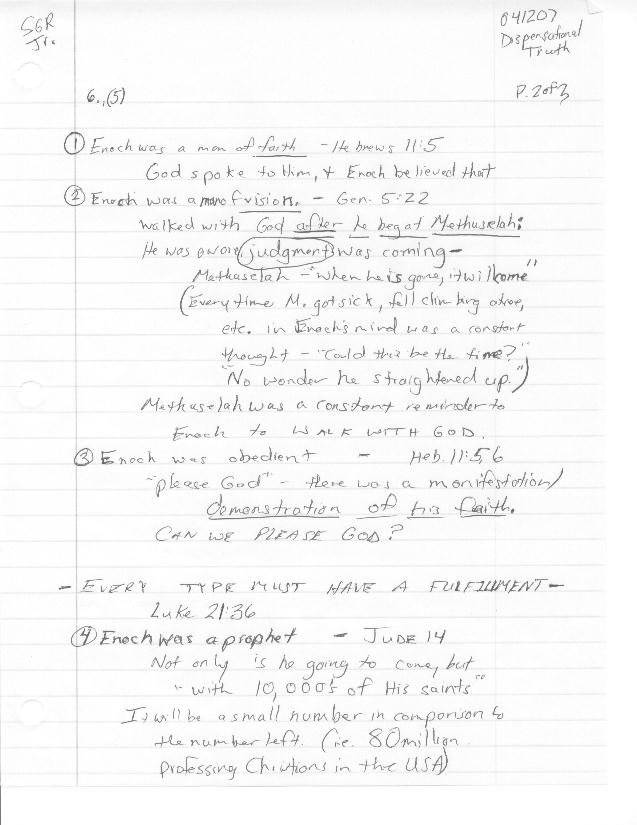
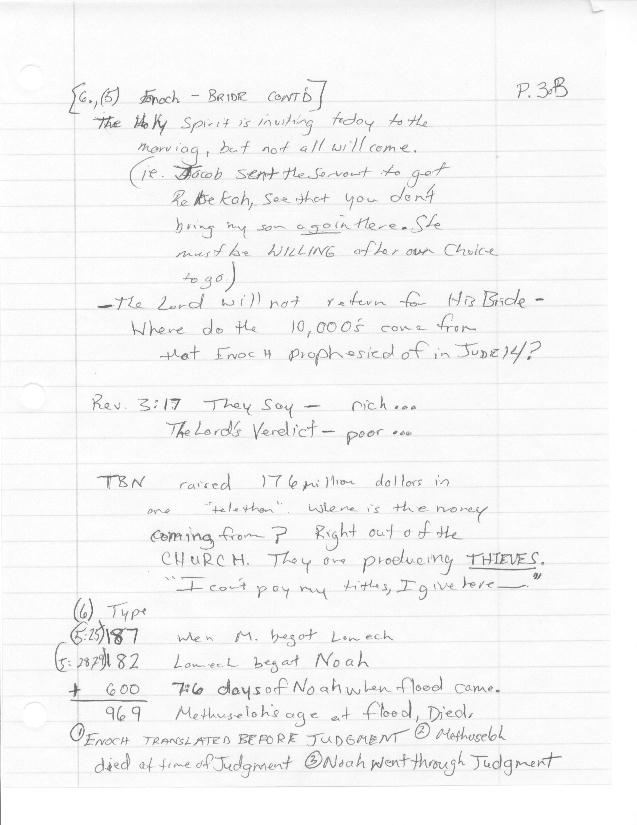
Article: THEME OF THE BIBLE by Tom L. Ballinger
PLAINER WORDS ONLINE …
THEME OF THE BIBLE - THE KINGDOM OF GOD
by Tom L. Ballinger
The theme of the Bible, without question, is the Kingdom of God. This is said in the full acknowledgment of the fact that Jesus Christ is the Chief Person of the Book. It is true that all Scripture points to the Lord Jesus Christ. Some of the references are very subtle, and others are very obvious. He is the principal Person, the leading Character, if you please. He is the LORD (Yahweh) of the Old Testament and the Lord Jesus Christ of the New. Despite these facts, the main theme of the Word of God, from Genesis to Revelation, is the Kingdom of God.
Any book that makes sense that transmits an idea must have a principal idea, a vision, a premise, a story-line, or plot. For those, like so many church-going, pew-sitting Christians, who don’t have a clue—they think the Bible is a confusing Book. And they must have a preacher to tell them what is relevant and what they should believe. The problem, if not of laziness, is that they, themselves, have failed to find the central theme of the Bible—the Kingdom of God.
The actual term, the “Kingdom of God,” is not found in the Old Testament, but that doesn’t mean the truth concerning it is absent. The fact is that a thousand and one prophetic declarations are found in the Old Testament which are, later, summed-up in the New Testament under the designation: the Kingdom of God, or the Kingdom of Heaven (these two terms are synonymous).
The New Testament opens and begins with the announcement that “the Kingdom of God is at hand.” These terms are indicative that they have been a previously, well-known doctrine. The simple announcement, “Repent for the Kingdom of God is at hand,” is made without explaining its meaning to the Jewish audience to whom this announcement was made. This fact clearly presupposes that the subject matter contained in the expression—the Kingdom of God, needed no defining, or explaining. So, it can safely be said that in the opening pages of the New Testament, it is taken for granted that the Kingdom was something well-known by the Jewish audience and was already the object of their faith and hope.
The meaning which the Lord Jesus attached to the phrase, the Kingdom of God, can only have the meaning given to it in the Old Testament. If another concept were intended by the “Kingdom of God,” some explanation would have been necessary at the beginning of the ministries of John the Baptist and Jesus of Nazareth in order to avoid any misunderstanding. The facts are that John and Jesus made the announcement of the Kingdom on the presumption that their audience knew what the Kingdom was. The people reacted by coming to John and Jesus for baptism, signifying they were to be identified as being submissive to the new order of things which were at hand. They would not have done this without understanding what the Kingdom meant.
The announcement about the “Kingdom of God” was not a new concept. However, the added ingredient, “at hand,” was new. The “at hand” phrase has caused a great deal of difficulty to Bible students because two-thousand years later, the Kingdom still has not come. “At hand” simply means to draw near, to approach, or soon to come-to-pass. John the Baptist and Jesus Christ clearly stated, “Repent for the Kingdom of God is at hand.” Since the Kingdom has not yet become a reality, were they wrong? No! The solution is simple. The Kingdom, when announced, was indeed “at hand.” It was the next PROPHETIC EVENT TO TAKE PLACE. But, God surprised the saints, the world, and the devil by suspending all prophecy and ushering in a secret dispensation—the Mystery. That cancelled-out the “at hand” position of the Kingdom.
When I think of an event in the Bible as being “at hand,” that means to me that the event mentioned, is the next scheduled prophetic event which is to take place. What would change the “at hand” position would be if God had a hidden purpose which He chose to insert into time.
Parenthetically, I believe with every fiber of my being that the “Blessed Hope” of Titus 2:13 is “at hand!” It is the next prophetic event to take place in God’s design of the ages.
The prophets had already set forth a period of time when this earth and all of the nations upon it would be governed by God; “O let the nations be glad and sing for joy: for Thou shalt judge the people righteously, and govern the nations upon earth. Selah” (Psalm 67:4). “The Kingdom of God” was an ancient body of truth set forth under this very descriptive term. God spoke about the coming Kingdom of God “by the mouth of all His holy prophets since the world began” (Acts 3:21). All of the prophets foretold and wrote about the time when the Heavens would rule over mankind. The Kingdom of God plays a major role as the Bible’s theme, but far too many Christians fail to “give it the time of day.”
The wise man finds out as many of the facts as possible about a matter, and he listens to the evidence and weighs it in the balances before passing judgment. The wise man is not hasty in making his decision on an important matter.
He isn’t quick to decide. He should consider the evidence set forth in this study. There are twenty headings, as well as, nine sub-headings listed which are of paramount importance to understanding the scope of the Kingdom of God:
1. The disciples of the Lord Jesus Christ were encouraged to give the Kingdom of God first place in their lives: “But seek ye first the Kingdom of God, and his righteousness; and all these things shall be added unto you” (Matt. 6:33).
2. It was the Kingdom of God that Christ proclaimed when He began His public ministry: “Now after that John was put in prison, Jesus came into Galilee, preaching the gospel of the Kingdom of God” (Mark 1:14).
3. Its proclamation was the work God had commissioned Him to do: “And he said unto them, I must preach the Kingdom of God to other cities also: for therefore am I sent” (Luke 4:43).
4. It was the Kingdom of God that He proclaimed and demonstrated in every city: “And it came to pass afterward, that he went throughout every city and village, preaching and shewing the glad tidings of the Kingdom of God: and the twelve were with him” (Luke 8:1).
5. It was the message the twelve were sent to herald: “And he sent them to preach the Kingdom of God, and to heal the sick” (Luke 9:2).
6. The seventy were also sent forth to preach the Kingdom of God: “After these things the Lord appointed other seventy also, and sent them two and two before his face into every city and place, whither he himself would come” (Luke 10:1). “And heal the sick that are therein, and say unto them, The Kingdom of God is come nigh unto you” (Luke 10:9).
7. Christ’s disciples were taught to pray for it to come: “And he said unto them, When ye pray, say, Our Father which art in heaven, Hallowed be thy name. Thy Kingdom come. Thy will be done, as in heaven, so in earth” (Luke 11:2).
8. The Kingdom was the hope and ultimate destination of Abraham, Isaac, Jacob, and all of the prophets: “There shall be weeping and gnashing of teeth, when ye shall see Abraham, and Isaac, and Jacob, and all the prophets, in the Kingdom of God, and you yourselves thrust out” (Luke 13:28).
9. The Kingdom of God was the hope of Joseph of Arimathaea who arranged for the entombment of the Lord Jesus Christ: “And, behold, there was a man named Joseph, a counseller; and he was a good man, and a just: (The same had not consented to the counsel and deed of them;) he was of Arimathaea, a city of the Jews: who also himself waited for the Kingdom of God” (Luke 23:50-51).
10. The Kingdom of God was the subject of the following parables as spoken by the Lord Jesus: the sower (Matt. 13:19), the tares among the wheat (Matt. 13:24), the mustard seed (Matt.13: 31), the leaven (Matt. 13:33), the hidden treasure (Matt. 13:44), the pearl of great price (Matt. 13:45-46), the net cast into the sea (Matt. 13:47), the laborers in the vineyard (Matt.20:1), the marriage of the king’s son (Matt. 22:2), the wise and foolish virgins (Matt: 25:1), the seed growing secretly (Mark 4:26).
11. The Kingdom of God was the subject of Jesus Christ’s teachings for forty days between His resurrection and ascension: “To whom also he shewed himself alive after his passion by many infallible proofs, being seen of them forty days, and speaking of the things pertaining to the Kingdom of God” (Acts 1:3).
12. It was the theme of some of His most important dissertations which He made while upon the earth:
- Matthew 12:28: “But if I cast out devils by the Spirit of God, then the Kingdom of God is come unto you.”
- Luke 17:20: “And when he was demanded of the Pharisees, when the Kingdom of God should come, he answered them and said, The kingdom of God cometh not with observation:”
- Luke 17:21: “Neither shall they say, Lo here! or, lo there! for, behold, the Kingdom of God is within you.” This means the Kingdom is spiritually perceived, or discerned, within the heart or mind.
- John 3:3: “Jesus answered and said unto him, Verily, verily, I say unto thee, Except a man be born again, he cannot see the Kingdom of God.” Seeing in the sense of, “Oh, I see.” Meaning, I comprehend.
13. The Kingdom of God was the theme of the Apostle Paul’s ministry from the beginning to the end—Acts 9 through 2 Timothy, including the Prison Epistles.
14. It was the hope of believers under Paul’s Acts ministry: “Confirming the souls of the disciples, and exhorting them to continue in the faith, and that we must through much tribulation enter into the Kingdom of God” (Acts 14:22).
15. The Kingdom was the subject of Paul’s reasoning out of the Scriptures in the synagogue in Ephesus: “And he went into the synagogue, and spake boldly for the space of three months, disputing and persuading the things concerning the Kingdom of God” (Acts 19:8).
16. Paul’s three years, spent in Ephesus, is summed up as proclaiming the Kingdom of God: “And now, behold, I know that ye all, among whom I have gone preaching the Kingdom of God, shall see my face no more. Wherefore I take you to record this day, that I am pure from the blood of all men. For I have not shunned to declare unto you all the counsel of God.” (Acts 20:25-27). Declaring “all [the whole] counsel of God” is intimately linked to the proclamation of the Gospel of the Kingdom of God; having done so made it possible for him to be pure from the blood of all men.
17. The Kingdom of God was Paul’s message throughout the day-long meeting with the chief Jews of Rome: “And when they had appointed him a day, there came many to him into his lodging; to whom he expounded and testified the Kingdom of God, persuading them concerning Jesus, both out of the law of Moses, and out of the prophets, from morning till evening” (Acts 28:23).
18. It was at the close of that day that Paul was inspired to make the momentous pronouncement: “Be it known therefore unto you, that the salvation of God is sent unto the Gentiles, and that they will hear it” (Acts 28:28). Thereby, officially ending the Acts (or Pentecostal) Dispensation.
19. Nevertheless, the Kingdom of God continued to be part of Paul’s message for the two whole years he dwelt in his own hired house after Acts 28:28: “And Paul dwelt two whole years in his own hired house, and received all that came in unto him, Preaching the Kingdom of God, and teaching those things which concern the Lord Jesus Christ, with all confidence, no man forbidding him” (Acts 28:30-31).
20. Even after the Apostle Paul received the revelation of the Mystery (Eph. 3:1-6, Col. 1:25-27) and made it known, Kingdom truth was not set aside; only another application of it was made known. The Kingdom of God is part of Present Truth as evidenced by references to it in the Prison Epistles.
a. Ephesians 5:5: “For this ye know, that no whoremonger, nor unclean person, nor covetous man, who is an idolater, hath any inheritance in the Kingdom of Christ and of God.” Here, are enumerated sins which will bar the practitioners of them from the Kingdom of God. This is one Kingdom, not two.
b. Colossians 1:12-13: “Giving thanks unto the Father, which hath made us meet to be partakers of the inheritance of the saints in light: Who hath delivered us from the power of darkness, and hath translated us into the Kingdom of his dear Son:” This is another name for the Kingdom of God.
c. Colossians 4:11: “And Jesus, which is called Justus, who are of the circumcision. These only are my fellowworkers unto the Kingdom of God, which have been a comfort unto me.” Here, in the context, Paul mentioned several men of the circumcision who were his fellow-workers, laboring in the ministry for the Kingdom of God. If Kingdom truth was left behind at Acts 28, then, Paul and his fellow-laborers were laboring in vain. I don’t believe Paul was confused at all.
d. Timothy 4:1: “I charge thee therefore before God, and the Lord Jesus Christ, who shall judge the quick and the dead at his Appearing and his Kingdom.” Here, Paul in no uncertain terms, tells Timothy that the Dispensation of Grace will end with Christ’s appearing (i.e. epiphany) and His Kingdom becoming manifest in the earth.
e. Timothy 4:18: “And the Lord shall deliver me from every evil work, and will preserve me unto his heavenly Kingdom: to whom be glory for ever and ever. Amen.” According to the Apostle Paul, himself, his hope after Acts 28 was the Heavenly Kingdom. He had the assurance from the Lord Jesus Christ that he would be preserved (or saved) from every evil work thrown at him. This would result in Paul’s realization of his hope—the “Heavenly Kingdom” of Christ.
The Kingdom of God (i.e., Christ) is such an integral part of the Bible it is astounding that most teachers and students of the Word have so little knowledge of the Kingdom of God. No matter how many bits and pieces of the Word a person has digested, if he knows very little about the Kingdom of God, he has no real knowledge of the Bible. In order to make sense, these bits and pieces must sooner, or later, be related to a central theme. If they are related to Christ, this is still not the end. If the glories of Christ Jesus are considered, we will always come to the Kingdom of God of which He will be the Divine King.
Those who are not instructed in the Kingdom of God will never understand the parables, for this is what most of the parables are about. Those who fail to declare the truth about it are not declaring the whole counsel of God. They will accept such unscriptural things, such as: God offered the Kingdom to Israel, or Israel rejected the offer of the Kingdom.
In view of the important place that the Kingdom of God has in the Bible, one would think that this term would be on their lips, or the tips of their pens, or the click of their word processors of all whose lives have been shaped by the Bible. To those teachers who claim to be expounding the Word of God, while leaving out the central theme of the Book, I would have to say, along with our Lord Jesus Christ, that the Kingdom has suffered violence (Matt. 11:12). The phrase concerning the Kingdom of God has suffered great violence at the hands of men all throughout the Christian era. It has been incorrectly defined, erroneously interpreted, and hopelessly confused.
In closing, it should be said in an encouraging way that we all should get into God’s Book and find the real truth concerning the coming Kingdom of God and all of the concurrent events encapsulated with its manifestation.
Tom L. Ballinger
Article: THE FOUNDATIONS OF DISPENSATIONAL TRUTH. by E.W. Bullinger
THE FOUNDATIONS OF DISPENSATIONAL TRUTH.
BY THE LATE DR E.W. BULLINGER
The Three Spheres of Future Glory.
THERE is still something more to learn concerning the dispensations before we can rightly understand the unique
position and wonderful teaching of the later Pauline Epistles written from the prison in Rome.
These dispensations are commonly spoken of as: two, the old and the new, but we must bring them, as all else, to the
bar of the written Word to see whether we have learned from man. or from God, from tradition or from revelation.
To some extent we shall all agree.
1. We shall all be agreed that the great subject of the Old Testament prophecies is a restored Israel and a regenerated
earth (Matt. 19. 281. It is surely unnecessary to quote the many prophecies which tell of the time when the earth shall
be full of the knowledge and glory of the Lord as the waters cover the sea (Num. 14:21,. Ps. 72:9, Isa. 6: 3 ; 11:9,.
Hab. 2.:14).
We are at one with all our readers in taking these prophecies in their literal meaning ; and in not attempting to explain
them, or rather fritter them away by any spiritualizing interpretation which deprives them of all their truth and power.
We all look forward also to the time when " He that scattered Israel will gather him" (Jer. 31:10).; when they " shall
all be taught of God " (John 6. :45, Isa.51:13); when "the kingdoms of this world shall become the kingdom of our
LORD, and of His Christ" (Rev. 11: 15) ; and when the earthly Jerusalem shall be restored in more than all its ancient
glory.
That kingdom and sphere of blessing and glory will be on the EARTH ; and the new Israel with a heart of stone
changed to a heart of flesh and with a new spirit, will bring forth "the fruits of righteousness " (Ezek. 36.2.1-36, Matt.
21. 23). This will be the regeneration (or Palingenesia) when the apostles will be seated " on twelve thrones judging
the tribes of Israel" (Matt. 19. 28).
This will be the first and lowest sphere of blessing. I twill be on EARTH, and under the whole heaven. These are
the people of the saints of the Most High " Dan. 7: 27)
All the nations of the earth will share in this blessing according to God's original promise to Abraham.
2. But Abraham and his spiritual seed are "the saints of the Most High " as distinct from "the people " (of these saints)
on the earth (Dan. 7: 18, 22, 25), and occupying a distinct place in the HEAVENLY SPHERE of this same kingdom.
These, according to the Lord's words in Luke, are " equal to the angels," " sons of the resurrection " (Luke 20:34
-36) raised in the " first resurrection " before the thousand years of earthly blessing for Israel and for the nations " under
the whole heaven " (Deut. 4:19, Rev. 20:4-6). These belong to " that great city the holy Jerusalem," which John saw "
descending down from heaven, having the glory of God ; and her light like unto a stone most precious." This "holy
Jerusalem" is fully described in Rev. 21: 9-27. It is the" city which hath THE foundations" for which Abraham had
been taught to look (Heb. 11:10) when he "saw Christ's day and was glad " (John 8: 56) : for, as " faith cometh by
hearing," Abraham must have heard : and this " hearing " must have come "from the spoken word of God" (Rom.
10. 17).
This is the " inheritance " of those who, as Peter declares to the believers of the Dispersion, "have obtained like
precious faith with us." That inheritance" is "incorruptible, and undefiled, and fadeth not away, reserved in HEAVEN
for you." The Greek, by the figure Homoioteleutos, emphasizes this " inheritance " as being not earthly, but
aphtharton, amianton, amaranton (1 Pet. 1:4).
The inhabitants of that heavenly city are declared to be " the bride, the. Lamb's wife " (Rev. 21:9).
From the call of Abraham there have ever been these two seeds, the earthly and the heavenly.
The one was likened by Jehovah to " the dust of the earth " or "the sand of the sea " (Gen. 13. 16 ; 22. 17); and
the other was likened to " the stars of heaven " (Heb. 11:12 ; Gen., 15: 5).
Both expressions suggest multitude, but the former is specially associated with earthly blessing, while the latter
points to " the partakers of a heavenly calling (Heb. 3:1).
These latter, like their father Abraham, looked for a heavenly portion and a heavenly blessing, for the city "
which hath the foundations."
"These all died in. faith, not having received the promises, but having seen them and greeted them from afar,
and having confessed that they were strangers and pilgrims on the earth. For they that say such things make it
manifest that they are seeking after a country of their own. And if indeed they had been mindful of that country
from which they came out, they would have had opportunity to return. But now they desire a better country,
that is a HEAVENLY; wherefore God is not ashamed of them to be called their God; for He hath prepared for
them a city" (Heb. 11:13-16, R.V.)
Where, and what could that city lave been if it was not the city which John was shown " descending out of
heaven from God," the foundations of which are specially described in Rev. 21:19 20.
All through the ages, from Abraham's day to the present, these " partakers of a heavenly calling " may be traced.
They formed `'the congregation of the Lord," and are continually spoken of as such.
Not all Israel, were Tabernacle and Temple frequenters and worshippers. Not all carried out the laws given by
Moses, or offered the prescribed sacrifices, attended "the feasts of Jehovah," or carried out the ordered ritual.
Those (probably the few, as we see it to-day) who gathered to the stated worship of Jehovah are called the
"assembly " or the "congregation."
The Hebrew word for " congregation " is from kahal (from which doubtless we have our English word "call ").
The verb means to call, assemble, gather together : and the noun is used of any assembly thus called. Seventy
times in the Septuagint version of the Old Testament it is rendered ekklesia (the word for ` church " in the view
Testament).*
I t is actually used in the expression ' the ekklesia ('or church) of the LORD " in Deut. 23: 1, 2, 3, 8, 1 Chron. 28: 8
Micah 2:5. In Neh. 13. 1 it is ` the ekklesia (or church) of God."
It is this ekklesia (or church) that is referred to as " the congregation " in Ps. 22: 22: 26:12: 35:18 ; 40: 9 ,10 ;
68.26.** In Ps. 22: 25 it is spoken of as "the great ekklesia or congregation," and in Ps. 149:1 as "the ekk lesia
of the saints."
This is what David means in Psalm 22: 22, when he says :
" In the midst of the congregation will I praise Thee " (v. 22), and -
" My praise shall be of Thee in the great congregation " (v. 25.)
This is the usage of the same word in the Gospels when the Lord said
" Upon this rock will -I build My ekklesia" (Matt.16:1 8).
He did not, when addressing Israelites, use the word in the new, exclusive and special sense in which it was
afterward to be used in the revelation of "the secret " in the Prison Epistles ;but in the larger and wider Old
Testament sense which His hearers would understand as embracing the whole assembly of Jehovah's believing
and worshipping people who were " partakers of a heavenly calling" (Heb. 3: ).
When the Spirit by Stephen speaks of " the ekklesia in the wilderness (Acts 7. 38) He means this congregation
of pious worshippers.
Those who were kept secure under the shadow of the Almighty" during the 38 years of penal wanderings in
the Wilderness, see Ps. 90 and 91.
When the Lord added to the ekklesia such as were being saved (Acts 2.:47) after Pentecost, He added them
to the 120 who before Pentecost assemble ( together in the upper room, and who "continued daily in the Temple
(no longer offering sacrifices and partaking of the food furnishes thereby), but , breaking bread (or eating; as in
Luke 24: 30, 35 and Acts 27: 35) at home, with gladness and singleness of heart, praising God, and having favour
with all the people.
"And the Lord added to the church (ekklesia) daily such as were being saved " (Acts 2. 46, 47).
It is true that the words "the church" (Gr. ekklesia) in vs. 47, are omitted by all the Textual Critics (even the most
conservative and least " modern ") Lachmann, Tischendorf, Tregelles, Alford, Westcott and Hort, and the Revised
version; but we lay no stress on the omission here, because even as it stands, it is used in the Old Testament sense
of the congregation of the LORD," and not in the later sense as found in the Epistle to the Ephesians : for, they
would not have understood it (neither should we to-day, if we had never seen that later Epistle).
When Paul says he " persecuted the ekklesia of God " (1 Cor. 15: 9: Gal. 1:13), he does not use the word in a
sense which he had at that time never heard of, or had even the remotest idea of. His words must be understood
in the same sense in which he then used them; and we must not read into any passage of Scripture that which was
the subject of a subsequent revelation; especially, when the sense is perfectly plain and clear as it stands.
The word ekklesia in the Gospels, Acts and the earlier Pauline Epistles must be taken by us in the sense of its Old
Testament (Septuagint) usage as meaning simply the congregation or assembly, or company of Jehovah's worshipping
people, " partakers of a heavenly calling," having a heavenly hope, a heavenly sphere of blessing, and looking for
their part in the ''resurrection unto life."
It had been revealed of old that there would be a resurrection, (see job. 19. 25-27; Hosea 13: 14; John 11. 24) ;
but it was subsequently revealed also that there would be two resurrections, one to life, and one to judgement.
Paul testified of the former as being the hope of those who were worshippers of God (Acts 24. 14, 15; David
hoped for it (Psalm 16:9-11;*** 49: 14, 15). So did Daniel (Dan. 12. 1-3).
The Lord plainly spoke of the former as the resurrection of the just " (Luke 14: 14) ; and, as "the resurrection of
life " (John 5: 29). " By the word of the Lord " was revealed a further hope, or rather, an expression of the hope
in John 11: 25, 26.
There was not only the hope for those who should have part in the " first resurrection," but for those who should
be " alive and remain" when that event should take place.
The " word of the Lord" first mentioned it, and the Holy Spirit by Paul expands it in 1 Thess. 4: 16, 17
It concerns the Lord, not only as to His being "the Resurrection," but as to His being " the Life" also. He says:
c | I am the Resurrection
d | I and the life.
c | He that believeth in Me, though he die, he shall live (again). [To him] I will be °' the resurrection "
d | and everyone who [is- alive, and believing in Me shall to nowise die, for ever." [To him I will be the "Life."
This was (and still is) the hope for all who are " partakers of a heavenly calling " (Heb. 3:1).
Many of these were to be found when Messiah came. They were those who waited for the consolation of Israel
(Luke 2:25)
who "looked for redemption in Jerusalem" (Luke 2:38),
who " trusted that the Lord was He who should have redeemed Israel " (Luke 24:21),
who " waited for the kingdom of God " (Mark 15:43,; Luke 23: 51),
who were " as many as received Him " (John 1:12),
who gladly received Peter's or Paul's word " on the day of Pentecost and after (Acts 2:41, 8:14, 11:1, 17:11,
who received the word in much affliction "(1 Thess. 1: 6) : and
who " when they received the word, accepted it not as man's word, but even as it is truly God's word which worketh
effectually in you that believe" (1 Thess. 2:13).
who "received not what was promised," (Heb. 11:39) but who believed and embraced it by faith.
Which of us has not been in difficulties as to those we speak of as " the Old Testament saints"?
Well, here they are seen all through the Old Testament as being " the church or assembly of God," " partakers of a
heavenly calling," possessing a heavenly hope, and looking for a heavenly sphere of blessing.
3. This brings us to the third sphere, which is the greatest blessing of all, and the highest in glory.
It had been kept secret " from ages and from generations." It is the eternal " purpose " of God, made " before the
foundation of the world," and was not " made manifest " by being committed to prophetic writings.
It was a secret not relating to Israel on the earth ; nor to the " partakers of a heavenly calling " ; but to Christ and
the elect members of His body.
Even in the ministry of Christ it was among the things He could not then reveal even to the twelve apostles in the
privacy of the upper room after the last supper. Not only could He not say these things then, but the apostles
themselves would not have been able to bare them if He had.
And, if the Lord did not mention these things in the Gospels then, certainly the apostles could not have " confirmed "
them in the Acts of the Apostles, afterward.
They were" the things of Christ," i.e., those things which stand in a special relation to Him, the things that relate to the
whole of the truth. " the truth " which would not be complete without them.
They were, of necessity, reserved for " the Spirit of truth " to reveal. " HE will guide you into the whole of the truth."
These precious " riches of grace," and of glory these were the doctrines which had for their foundation the facts of
Christ's mission, which had not at that time taken place: though they were all then near at hand.
Those events in Christ's life on earth were the foundation of the doctrines built upon them; and without them the
doctrines could not have been known.
Until He had suffered, died. risen. and ascended, how could the doctrines of Eph. 2: 5, 6 based on them be revealed
and taught.
But this special coming, ministry and guidance of " the Spirit of truth " must be held over for our next Editorial: for we
must of necessity include that last phase of what " Jehovah hath spoken "before we commence our consideration of
the Prison Epistles : for therein and only therein, do we find the " riches " of grace and glory into which the Holy Spirit
was to guide: them, the good news of which was destined to fill the long era of Israel's blindness and the nation's dark
(spiritual,) night (Isa. 60:1-3).
The Prison Epistles, following immediately after the proclamation of Israel's judicial blindness and hardening (recorded
in Acts 28: 25, 26), have for their one great subject the revelation of the third of the three spheres of blessing and glory
which stands in special relation to Christ and His church.
This sphere is not on the earth.
It is not over the earth.
It is in the highest heavens.
Hence, it has nothing to do with earthly " signs and wonders "that would follow those who in happy obedience believe
what is there written.
Such surpassingly exalted language has never before, or since been spoken of human believers.
The very glory of that sphere is inconsistent with any earthly signs or manifestations however wonderful. or, ordinances
however once significant.
Those Epistles view the believer of them, not with " signs following," but they view him as " dead " to this world and
all earthly associations and connections, and as having jointly suffered, jointly died, jointly risen, and being jointly
seated with Christ in the highest heavens.
Even the "affections" and "thoughts" are not to be concerned with the things on earth ; they are to be centred on "
the things above "where Christ is already seated at the right hand of God.
Hence, we do not read in those Epistles about the coming of Christ to the earth, but rather about our being removed
to be with Him where pie is, not about His parousia, or presence on earth, or " in the air " ; but about our presence
and manifestation with Him in His own glory; not about anastasis or resurrection (which is the subject of the earlier
Pauline Epistles), but about an "ex-anastasis," (Phil. 3: 11) and "the calling on high" (Phil. 3: 14) which is the subject
of the later Epistles; not about any personal happiness which we may have, but about Christ's personal glory, in which
we have the wondrous privilege of sharing.
In this connection we would call attention to one word, which, in our judgment, is the real key-word of the Prison
Epistles, and of this third and highest sphere. It is a remarkable word, found. in this form, only here, in the New
Testament. It occurs once before in Rom. 13:9, but there it is in the present passive voice (anakephalaioutai), and
means " is summed up." But in Eph. 1:10 it is the Aorist Infinitive of the middle voice, (anakephalaiosasthai). This
difference is ignored both by the Authorised and the Revised Versions, which read the middle voice of Eph. 1. to
as though it were the Active. This is an almost unpardonable oversight, in the interest of the ordinary Bible reader,
who has an undoubted right to a correct grammatical rendering from such a quarter.
Translated correctly, the word and the entire passage emphasize the underlying fact that in all things there revealed,
our Heavenly Father has, FOR HIMSELF, purposed what is here stated, viz., that
according to His good pleasure, which He purposed in Himself, in order to a dispensation of the fulness of
the seasons, TO-SUM-UP-FOR-HIMSELF, every thing in Christ: things in heaven and things on earth,
even in Him, in whom we were taken as an inheritance, being foreordained according to the purpose of Him
who worketh all things according to the counsel of His own will, that we should be to the praise of His glory
who have before hoped in Christ.
This will be enough to show us that the Cosmos, as shown in Col. 1: 15, 16, is a larger, higher, and greater sphere than
(1) that of earthly glory, or (a) that of the glory reserved for those who are " partakers of a heavenly calling."
The Old Testament, the Acts and the earlier Pauline Epistles deal with these two lower spheres of glory, but the
later Epistles reveal a third sphere of Headship and Heirship above the earth or the heavens.
1 Cor. 15:40 tells of " terrestrial " glory and of "celestial's glory, which differ the one from the other.
But there is a third sphere; a sphere of cosimical glory (if we may use the word in this connection) high above all
created beings, whether principalities, or powers, or, might, or thrones, or dominions, which are mentioned (though
not defined or explained) in Eph. 1:21, Col. 1: 16 in relation to Christ, who shall be "Head over all."
This includes the putting down of all enemies, and the final crushing of the head of " the old serpent" the devil.
This is why the enemy's great endeavour, now, is to blind the minds of men so that the light of this " good news (or
gospel) of the glory of Christ" should be hidden from them (2 Cor. 4: 3, 1).
And this is why we, who obey God by believing Him as to this, His greatest and most glorious revelation, should
cherish it as our earnest hope and constant theme; and, not being ignorant of Satan's devices," since we are thus
told against what his assault is being made, therefore know where our defence is to be directed.
In other words, we are to labour to make known : the riches of glory " which are connected with this third and
Highest sphere of blessing and glory and honour for " Christ and His Church."
==================================================================================================
*'The Hebrew word is rendered _ congregation " 86 times; "assembly," 17 times; "company," 17 times; multitude," 3 times.
** In Num. 16. 3 and 20.4 the Hebrew kahal is rendered in the Sept. sunagoge = synagogue. In the R.V. this is rendered "the assembly of the Lord."
Article: SUMMARY OF THE DIVINE PLAN by S. Van Mierlo
SUMMARY OF
"THE DIVINE PLAN"
By S. Van Mierlo
We believe that it will be helpful to first present a summary of our work, "The Divine Plan;" which provides
an overall view of the ages and the role of the people of Israel.
The Word of God accepted simply, as it is given to us, forms a unity without contradictions and makes known to us the Divine Plan.
Before any creation, God is. It is through the Image of God, also called "Son of God," that everything was created. The Son of God is Mediator in all things: creation, redemption, perfection.
The creature is good but not perfect (since it is not God). God wants to bring it freely to perfection. The creature is thus free and can make good or bad use of its freedom depending on whether it observes or ignores the will of God.
Creation comprises five ages (or eons). The living conditions and the laws differ completely from one eon to the other, but some correlation exists between the first and the fifth, and between the second and the fourth.
First eon
God, through His Son, freely creates free beings, thereby showing His perfection. Some beings draw away from God, thus falling into sin, and some even rise against Him. Satan (the Adversary), a cherub fallen through pride, plays the principal role in this senseless revolt. But God wills that the creature attain its destiny.
Second eon
After the chaos comes the reconstruction in six days. Adam is created in the Image of God and thus resembles the Son. He receives the grace necessary to have dominion aver the sea, the sky, and the earth, and to be king. But, above all, he must freely take up his position by accomplishing God's will. He misses his goal because of the seduction of Satan who wants to prevent the realization of the Kingdom on earth (A heavenly Kingdom, however, because it was instituted in heaven). Adam is thus deprived of the glory of God, he is separated from the source of Life (spiritual death). There only remains a remnant of bodily life: he is "dying," as will all those who come from him.
The earth is cursed. Man has not only become enemy of God, but also enemy of creation.
The fallen angels (and their progeny) corrupt the earth. The flood partially removes this corruption, Noah and his family remain.
Third eon
This is the "age" in which we live; it is called "the present evil age" and Satan is its god.
God intends to accomplish His Plan. He places the earth and the sea in the hands of Noah, then chooses Shem, Abraham, Isaac, and Jacob to serve as instruments of restoration and bring about the Kingdom. Satan reacts continually.
Abraham receives the promise of earthly and heavenly blessings: he will have two posterities.
God chooses a people from among the nations: Israel, elected to serve in bringing about the regeneration of the world, but who first must themselves be regenerated, i.e. enter into spiritual communion with God.
In order that this people realizes their state of sin and freely turns to God and be regenerated by Him, God indicates what He wishes, and teaches Israel what is good: He gives them the Law. This Law is based on His general Will with regard to all creature, but its special form is applicable only to Israel, particularly in that which concerns the ceremonies. By the Old Covenant, God requires that the Law be executed exactingly. The elected people miss their goal by attempting to do God's will by their own efforts; they should have had recourse to Divine grace.
All the history of Israel shows how this people have always tended to turn to idols, and demonstrates the patience of God who wants to bring His people, freely, to recognize their sin and repent. The Adversary continuously intervenes in order to prevent the coming of the Kingdom and the regeneration of the world.
Thus God has created a People, a Land (Canaan), a City (Jerusalem). For the Kingdom to come, it only lacked the repentance of Israel. The prophets remind the people of the Divine promises and foretell the blessings which will come on earth when the Messiah will be King.
Finally, the Son Himself, divesting Himself of His glory and coming in likeness to men, comes on earth in humility, and is obedient unto death on the cross. He resolves the insoluble problem: to reconcile the love and the justice of God, to enable the sinful creature incapable of doing good to enter into spiritual communion with God. He makes possible forgiveness, justification, reconciliation, and the sanctification of the sinner. He does not establish a new religion, but He enables the realization of the Divine Plan.
Jesus Christ addresses the chosen people, shows by His actions that He is their King, and calls for their repentance so that the Kingdom may come on earth. Miracles and signs confirm that the Kingdom is near. He chooses 12 Apostles (the Apostles of the circumcision) who will be seated on 12 thrones to guide the 12 tribes of Israel in this Kingdom. The nation of Israel will form a visible Church.
The Christ establishes the New Covenant with Israel (of which the prophets had spoken), in accordance with which the Law, i.e the Divine Will concerning them, could be accomplished by grace. Through their repentance, men can obtain forgiveness of sins, and through their faith in Jesus Christ, eonian (eternal) life., i.e. life on earth during the coming eon.
Some turn to Him, but the people as a whole reject Him and cause Him to be crucified. All seems lost, yet the cross is the only means for arriving at the restoration and the final goal: God all in all.
Through His resurrection out of the dead, Jesus Christ was declared with power to be the Son of God. Grace now abounds. God has condemned and reconciled the world in Him.
After the cross, Israel is not rejected. The 12 Apostles again insist on the need for repentance and on the coming of the Kingdom. This Kingdom, by which the next eon would begin, is characterized by world-wide regeneration, is still "near," as proven by the external signs: miracles, healings, angelic interventions, etc. The Law and the ceremonies are meticulously observed by the Jews, even those who believe in Christ. (The Jews, in fact, do not cease to be Jews when they believe in Christ, but can then be truly Jews and accomplish the Law through grace).
At Pentecost, the ancient promises made to Israel begin to be realized. Not until 10 years later does the Divine Word begin to be addressed to the Gentiles who partake of Israel's blessings in conformity with the prophecies.
Meanwhile Paul, who is not included among the Twelve, is converted. He first addresses himself to the Jews, but because of their hardening-which will prevent the Messiah's coming and the Kingdom on earth, thus also the blessing of the nations through Israel-the Apostle of the Gentiles opens a new Way based upon the heavenly Abrahamic blessings. He thus begins to proclaim a new message: justification by faith. This good news surpasses that of the Apostles of the circumcision (i.e. regeneration) and already aims at the conditions of the fifth eon. This proclamation, in a way anticipated, has the partial objective of provoking Israel, through jealousy, into accepting their privileges.
The Jews successively reject their Messiah in the great centers, and gradually Paul's message increases in importance. A last attempt is made by Paul at Rome (Acts 28), but here again the people will not listen. Israel is temporarily set aside as God's people, and any possibility of an early coming of the Kingdom disappears; at the same time all external signs (including the special, spiritual, visible gifts) announcing the Kingdom ceased. All that relates to Israel, such as the observation of the Law, the formation of a visible Church, the religious ceremonies instituted by God, also ceases. There is a radical change in dispensation which it is extremely important to reckon with when reading what was written before this date: for example, the Gospels, Acts, the Epistles to the Romans, Corinthians, Galatians, and Thessalonians. The parts of personal application in these messages remain, but all that applies to that dispensation now is past and ceases to be applicable today. Pentecostal gifts, in particular, do not apply to us.
Is this the failure of the Divine Plan? No! Paul, imprisoned, now proclaims a new message, unknown at any previous time and revealed to him only, concerning the great mystery: the Body of Christ of which Christ Himself is the Head. In spirit, we can already, individually reach the perfect position corresponding to the final goal of the Divine Plan: God all in all. The complete way of salvation is now known: natural man must become (small) child of God (new birth), then "son" of God (new creation-justification), and finally become perfect man. The present dispensation is thus that of the Church of the Mystery. It begins after the time of Acts, and will end before the restoration of Israel as the people of God and the coming of "the day of the Lord" which ends the present eon. During all of this period there is a break in the realization of the prophecies, our dispensation having been completely unknown to the prophets.
Israel passes through the great tribulation, repents, and the Lord comes in glory. This is the moment of the transformation of living believers and the resurrection of the dead.
All the kingdoms of the world are given to Christ Who only now seizes His great power and takes up His reign. He is King of all the earth. Satan is bound for 1,000 years.
Fourth eon
The Son of man is sitting on the throne of His glory, and the 12 Apostles are sitting on 12 thrones judging the 12 tribes of Israel. It is the "renewing" (the regeneration), the time of refreshing of all things, of which God spoke in ancient times through the mouth of His holy prophets. Israel now occupies the promised land, from the Nile to the Euphrates, and all the nations are blessed in Abraham. The Christian Jews form the Church of Christ on earth, a visible unity. Creation is delivered from bondage to sin. The earth has regained its normal fruitfulness; the nature of animals has changed, the duration of life has greatly increased. Satan being bound up, it is an era of justice and peace. The Temple at Jerusalem is the center of worship of Israel who faithfully observe the Law through grace; the New Covenant with this people is accomplished and leads them to the heavenly sphere.
After the 1,000 years Satan is released for a short time. He seduces the nations and is thrown in the lake of fire and brimstone. Those who have not taken part in one of the previous resurrections appear before the great white throne to be judged; they receive the punishment they deserve All enemies are finally placed under the feet of the Son.
In summary, we see on earth Israel and the regenerated (children of God) nations, in heaven the justified ones (the sons of God), and in the above-heavens those who have arrived at the measure of the stature of the fulness of Christ, demonstrating the infinite richness of the grace of God.
During this eon Christ reigns as King, and at the end gives the Kingdom to the Father and reigns with Him.
Fifth eon
This is the eon of the new creation. All the conditions are again changed radically, including the physical laws. It is "the day of God:" All that related to Adam, to the old humanity has now passed away, engulfed by the new humanity. All creation is absorbed by the heavenly sphere, except for those who are, so to speak, already outside creation in the above heavenly sphere.
The new Jerusalem comes down from heaven. Words cannot describe the glory of this age. One can, however, say that there is no sea, no suffering, no night and day, no death, no Temple, no curse, no sin. God dwells with men, Christ reigns with the Father.
Creation has been brought to the state it was in the first eon, but with this difference: it has learned, through God's infinite grace and the Son's sacrifice, to make good use of its freedom. In this way can creation attain perfection.
God all in all. God has reached His goal, and in so doing has achieved the impossible: He has increased His glory by creating and perfecting His creature. He is all in all. There is, therefore, no more Mediator, King, Priest. The Son has accomplished His work and possesses the glory which was His before His humiliation. The creature, through its communion with the Son, is raised with Him: it has reached perfect love, absolute freedom, by freely accepting God's will and thus forms a glorious unity.

Study: How Long was the Dispensation of Promise?
THESIS: THE DISPENSATION OF PROMISE SPANS A TIME OF 645-plus YEARS.
An explanation of the seemingly contradictory records of time of Genesis 3:15 and Exodus 12:40.
Genesis 15:13 And he said unto Abram, Know of a surety that thy seed shall be a stranger in a land that is not theirs, and shall serve them; and they shall afflict them four hundred years;
Exodus 12:40 Now the sojourning of the children of Israel, who dwelt in Egypt, was four hundred and thirty years.
Exodus 12:41
Acts 7:6 And God spake on this wise, That his seed should sojourn in a strange land; and that they should bring them into bondage, and entreat them evil four hundred years.
EXPLANATION:
2 DIFFERENT THINGS:
- The Hebrews were in bondage for 400 years.
- The Hebrews were in Egypt for 430 years.
1). Abraham’s call to Leaving Haran = _??___.
2). Leaving Haran to Isaac’s birth = 25 years.
3). Isaac’s birth to Jacob’s birth = 60 years.
4). Jacob’s birth to entering Egypt = 130 years.
5). Entering Egypt to Start of Affliction = 30 years.
6). Affliction to Exodus = 400 years.
645+ years
IN RETROSPECT:
Ga 3:17 And this I say, that the covenant, that was confirmed before of God in Christ, the law, which was four hundred and thirty years after, cannot disannul, that it should make the promise of none effect.
THIS SCRIPTURE CANNOT BE INTERPETED TO MEAN THAT ONLY 430 YEARS EXPIRED BETWEEN THE CALL OF ABRAHAM AND THE HEBREW EXODUS.
Article: The Gap Theory by Bert Thompson Ph.D.
Apologetics Press :: Reason & Revelation |
|
|
|
It is rare in the creation/evolution controversy to find issues on which both creationists and evolutionists agree. Generally speaking, the two world views are light-years apart. But there is one thing on which both sides agree: evolution is impossible if the Earth/Universe-system is young—with an age measured in thousands, not billions, of years. R.L. Wysong has commented:
Both evolutionists and creationists believe evolution is an impossibility if the universe is only a few thousand years old. There probably is no statement that could be made on the topic of origins which would meet with so much agreement from both sides. Setting aside the question of whether vast time is competent to propel evolution, we must query if vast time is indeed available (1976, p. 144).
It is interesting to observe how something on which both sides agree has caused so much disagreement. Aside from the basic issue of whether creation or evolution is correct, the most serious area of conflict between the biblical and the evolutionary scenarios is the chronological framework of history—in other words, the age of the Earth. This matter is of importance not only to evolutionists, but to theistic evolutionists, progressive creationists, and other “old-Earth creationists.” While a young Earth presents no problem whatsoever for a creationist, it is the death knell to each and every variety of the evolutionary scenario.
A simple, straightforward reading of the biblical record indicates that the Cosmos was created in six days only a few thousand years ago. Opposed to that view is the idea of evolutionists that the Universe is 15-20 billion years old, and that the Earth is 4.6 billion years old. Further complicating matters is the fact that the biblical record indicates living things were placed on the newly created Earth even before the end of the six-day creative process (e.g., plant life came on day three). The evolutionary scenario, however, postulates that primitive life evolved from nonliving chemicals roughly 3.5-4.0 billion years ago, and that all other life forms developed during the so-called geologic ages, with man arriving on the scene in one form or another 1-2 million years ago.
Even to a casual observer, it is apparent that this is no small problem. Much of the controversy today centers on the age of the Earth. The magnitude of the controversy is multiplied by two factors. First, theistic evolution and progressive creation are impossible if the Earth is young. Thus, if the proponents of these views wish to retain their belief systems, it is imperative that they find a way to place the time for an ancient Earth in the biblical record. Second, there is no middle ground that will permit the old-Earth/young-Earth scenarios to coexist; the gulf separating the biblical and evolutionary views on the topic of the age of the Earth is just too large. As Henry Morris has observed:
Thus the Biblical chronology is about a million times shorter than the evolutionary chronology. A million-fold mistake is no small matter, and Biblical scholars surely need to give primary attention to resolving this tremendous discrepancy right at the very foundation of our entire Biblical cosmology. This is not a peripheral issue that can be dismissed with some exegetical twist, but is central to the very integrity of scriptural theology (1984, p. 115).
If the Earth is ancient, where in the Bible can the time be inserted to ensure that antiquity? The time needed to guarantee an old Earth might be placed: (a) before the creation week; (b) during the creation week; or (c) after the creation week.
The attempt to insert geological time into the biblical text during the creation week is known as the Day-Age Theory—a concept that has fallen on hard times in recent years because it is completely without lexical or exegetical support from the biblical record (see Thompson, 1982, 1994). As a result, it has been rejected by numerous old-Earth creationists, theistic evolutionists, and progressive creationists.
Rarely do those desiring to insert geologic time into the biblical record attempt to place the time after the creation week, for two reasons. First, placing time after the creation has occurred does not help the case of the theistic evolutionist or progressive creationist. Time “after the fact” is a moot issue. Second, the biblical genealogies (e.g., Genesis 5, Genesis 11, Luke 3, etc.) have the text so well protected that it is manifestly impossible to insert the billions of years of time needed to allow for an ancient Earth (see Thompson, 1989).
Thus, the Bible believer intent on accommodating his theology to the uniformitarian dogma of an ancient Earth must find another way to force vast time spans into Genesis 1. The only option remaining is to insert the time before the creation week—a concept known as the Gap Theory.
THE GAP THEORY
Popularity of the Gap Theory (also referred to by such synonyms as the Ruin-and-Reconstruction Theory, the Pre-Adamic Cataclysm Theory, and the Restitution Theory) is generally attributed to the writings of Thomas Chalmers, a nineteenth century Scottish theologian. In recent years, the Gap Theory has undergone an “evolution” of its own, and for that reason is not easily defined. There are several variations, and its defenders do not agree among themselves on strict interpretations. However, a brief summation of its main tenets might be as follows.
The widely held view among gap theorists today is that the original creation of the world by God, as recorded in Genesis 1:1, took place billions of years ago. The creation was despoiled because of Satan’s rebellion against God, resulting in his being cast from heaven with his followers. A cataclysm occurred at the time of Satan’s overthrow, and is said to have left the Earth in darkness (the “waste and void” of Genesis 1:2). [NOTE: It is alleged by some Gap theorists that the cataclysm occurring at Satan’s overthrow terminated the geologic ages, after which God “re-created.” It is alleged by others that the cataclysm occurred first, and then was followed by the geologic ages, after which God “re-created.”] The world as God had created it, with all its inhabitants, was destroyed, which, it is claimed, accounts for the myriad fossils present in the Earth. Many holding to this theory place the fossils of dinosaurs, so-called “ape-men,” and other extinct forms of life in this gap. Then, God “re-created” the Earth in six literal days. By way of summary, then, the “gap” between Genesis 1:1 and Genesis 1:2 contains the story of an original creation, a judgment, and ruination, while the verses in Genesis 1:3 through the remainder of the chapter record the story of the Earth’s re-creation.
Is the Gap Theory Popular?
The Gap Theory has had, and continues to have, numerous supporters. George H. Pember, in Earth’s Earliest Ages (1876), advocated the Gap Theory. Harry Rimmer, in Modern Science and the Genesis Record (1937), helped popularize the theory. The renowned Canadian anthropologist, Arthur C. Custance, produced Without Form and Void (1970), which many consider the ablest defense of the Gap Theory ever put into print. George DeHoff advocated the theory in Why We Believe the Bible (1944).
J.D. Thomas, former chairman of the Bible Department at Abilene Christian University, has stated that “no man can prove that it is not true, at least in part” (1961, p. 54). The popular Scofield Reference Bible was first published in 1909; by 1917, it contained a reference to the Gap Theory in the footnotes accompanying Genesis 1. In more recent editions, references to the theory may be found as a footnote to Isaiah 45. John Clayton has accepted major portions of the Gap Theory, but has added to and deleted from the theory to produce what has come to be known as the Modified Gap Theory (see Clayton, 1976, pp. 147-148; Thompson, 1977, pp. 192-194; McIver, 1988, 8[3]:1-23; Jackson and Thompson, 1992, pp. 114-130).
Arguments Presented in Support of the Gap Theory
Advocates of the Gap Theory base their beliefs on several arguments, a summary of which is given here; comments and refutation follow.
- Gap theorists suggest that the word bara (used in Genesis 1:1, 21, 27) must mean “to create” (i.e.: ex nihilo creation), while the word asah cannot mean “to create,” but rather means “to make.” Therefore, the original creation was “created”; the creation of the six days was “made” (i.e., “made over”).
- Gap theorists suggest that the Hebrew verb hayetha (translated “was” in Genesis 1:2) should be rendered “became” or “had become”—a translation required in order to suggest a change of state from the original perfect creation to the chaotic conditions implied in verse 2.
- Gap theorists believe that the “without form and void” of Genesis 1:2 (tohu wabohu) can refer only to something once in a state of repair, but now ruined. Pember accepted these words as expressing “an outpouring of the wrath of God.” Gap theorists believe that the cataclysm that occurred was on the Earth, and was the direct result of Satan’s rebellion against God. The cataclysm, of course, is absolutely essential to the Gap Theory. Isaiah 14:12-15 and Ezekiel 28:11-17 are used as proof-texts to bolster the theory.
- Gap theorists believe that Isaiah 45:18 (“God created the earth not in vain”—tohu; same word translated “without form” in Genesis 1:2) indicates that the Earth was not tohu at the initial creation. Therefore, they suggest, Genesis 1:2 can refer only to a judgment brought upon the Earth by God.
- Gap theorists generally believe that there was a pre-Adamic creation of both non-human and human forms—a position adopted to account for the fossils present in the geologic strata.
The Gap Theory—A Refutation
I would like to suggest the following reasons why the Gap Theory should be rejected.
1. The Gap Theory is false because of the mental gymnastics necessary to force its strained argumentation to agree with the actual biblical text.
Bernard Ramm, a progressive creationist, has admitted as much:
It gives one of the grandest passages in the Bible a most peculiar interpretation. From the earliest Bible interpretation this passage has been interpreted by Jews, Catholics, and Protestants as the original creation of the universe. In six majestic days the universe and all of life is brought into being. But according to Rimmer’s view the great first chapter of Genesis, save for the first verse, is not about original creation at all, but about reconstruction. The primary origin of the universe is stated in but one verse. This is not the most telling blow against the theory but it certainly indicates that something has been lost to make the six days of creation anti-climactic. So entrenched has this theory become in hyper-orthodox circles that they feel as if the foundations are removed if this theory is criticized, whereas the majority of commentators feel that the entire theory has a peculiarity to it in that it makes the great creation chapter the second time round! (1954, p. 138, emp. in orig.).
2. The Gap Theory is false because it is based on an incorrect distinction between God’s creating (bara) and making (asah).
According to the standard rendition of the Gap Theory, the word bara must refer to “creating” (i.e., an “original” creation), while asah can refer only to “making” (i.e., not an original creation, but something either “made over” or made from preexisting materials). A survey of these two words in the Old Testament, however, clearly indicates that they are used interchangeably. Morris has observed:
The Hebrew words for “create” (bara) and for “make” (asah) are very often used quite interchangeably in Scripture, at least when God is the one referred to as creating or making. Therefore, the fact that bara is used only three times in Genesis 1 (vv. 1, 21, and 27) certainly does not imply that the other creative acts, in which “made” or some similar expression is used, were really only acts of restoration. For example, in Genesis 1:21, God “created” the fishes and birds; in 1:25, He “made” the animals and creeping things. In verse 26, God speaks of “making” man in His own image. The next verse states that God “created” man in His own image. No scientific or exegetical ground exists for distinction between the two processes, except perhaps a matter of grammatical emphasis... (1966, p. 32).
The insistence by Gap theorists, and those sympathetic with them, that the word bara always must mean “to create something from nothing,” simply is incorrect. In his commentary, The Pentateuch, Old Testament scholar C.F. Keil concluded that when bara appears in its basic form, as it does in Genesis 1,
...it always means to create, and is only applied to a divine creation, the production of that which had no existence before. It is never joined with an accusative of the material, although it does not exclude a pre-existent material unconditionally, but is used for the creation of man (ver. 27, ch. v. 1,2), and of everything new that God creates, whether in the kingdom of nature (Num. xvi.30) or of that of grace (Ex. xxxiv.10; Ps. li.10, etc.) (1980, 1:47, first emp. in orig.; last emp. added).
There are numerous examples where bara and asah are used interchangeably. In Psalm 148:1-5, the writer spoke of the “creation” (bara) of the angels. Yet when Nehemiah addressed the creation of angels (9:6), he employed the word asah to describe it. In Genesis 1:1, the text speaks of God “creating” (bara) the Earth. But when Nehemiah spoke of that same event (9:6), he employed the word asah. When Moses wrote of man’s “creation,” he used bara (Genesis 1:27). But one verse before that (1:26), he spoke of the “making” (asah) of man. Moses also employed the two words in the same verse when he said: “These are the generations of the heavens and of the earth when they were created [bara], in the day that Jehovah made [asah] earth and heaven” (Genesis 2:4).
Gap theorists teach that the Earth was created (bara) from nothing in Genesis 1:1. However, Moses stated in Genesis 2:4 that the Earth was made (asah). Gap theorists are on record as advocating the view that asah can refer only to that which is made from something already in existence. Do they believe that when Moses spoke of the Earth being “made,” it was formed from something already in existence?
One verse with which proponents of the Gap Theory have never dealt adequately is Nehemiah 9:6.
Thou art Jehovah, even thou alone; thou hast made [asah] heaven, the heaven of heavens, with all their host, the earth and all things that are thereon, the seas, and all that is in them, and thou preservest them all; and the host of heaven worshippeth thee.
The following quotation from Fields explains why this verse is so extremely critical in a refutation of the Gap Theory.
While the passages in Genesis cited by one of the lexicons...mention only the making of the firmament, sun, moon, stars, and animals, it must be carefully marked by the reader that in Nehemiah 9:6 the objects of God’s making (asa) include the heavens, the host of heavens, and the earth, and everything contained in and on it, and the seas and everything they contain, as well as the hosts of heaven (probably angels).
Now this is a very singular circumstance, for those who argue for the distinctive usage of asa throughout Scripture must, in order to maintain any semblance of consistency, never admit that the same creative acts can be referred to by both the verb bara and the verb asa. Thus, since Genesis 1:1 says that God created (bara) the heavens and the earth, and Exodus 20:11 and Nehemiah 9:6 contend that he made (asa) them, there must be two distinct events in view here....
So that, while asa is quite happily applied to the firmament, sun, moon, stars, and the beasts, its further application to everything else contained in the universe, and, indeed, the universe itself (which the language in both Exodus 20:11 and Nehemiah 9:6 is intended to convey) creates a monstrosity of interpretation which should serve as a reminder to those who try to fit Hebrew words into English molds, that to strait-jacket these words is to destroy the possibility of coherent interpretation completely! (1976, pp. 61-62, emp. in orig.).
3. The Gap Theory is false because, in the context of Genesis 1:2, there is no justification for translating the verb “was” (hayetha) as “became.”
Gap theorists insist that the Earth became “waste and void” after Satan’s rebellion. Yet usage of the verb hayah argues against the translation, “The earth became waste and void” (Genesis 1:2). Ramm has noted:
The effort to make was mean became is just as abortive. The Hebrews did not have a word for became but the verb to be did service for to be and become. The form of the verb was in Genesis 1:2 is the Qal, perfect, third person singular, feminine. A Hebrew concordance will give all the occurrences of that form of the verb. A check in the concordance with reference to the usage of this form of the verb in Genesis reveals that in almost every case the meaning of the verb is simply was. Granted in a case or two was means became but if in the preponderance of instances the word is translated was, any effort to make one instance mean became, especially if that instance is highly debatable, is very insecure exegesis (1954, p. 139, emp. in orig.).
The verb hayetha of Genesis 1:2 is translated “was” in all the standard translations because that is its meaning. Surely it is significant that none of the Old Testament linguists felt compelled to translate hayetha to suggest that the Earth became waste and void, as gap theorists propose.
4. We reject the Gap Theory because tohu wabohudoes not mean only “something once in a state of repair, but now ruined.”
Gap theorists believe that God’s “initial” creation was perfect, but became “waste and void” as a result of Satan’s rebellion. Whitcomb has responded:
“Without form and void” translate the Hebrew expression tohu wabohu, which literally means “empty and formless.” In other words, the Earth was not chaotic, not under a curse of judgment. It was simply empty of living things and without the features that it later possessed, such as oceans and continents, hills and valleys—features that would be essential for man’s well-being. In other words, it was not an appropriate home for man.... [W]hen God created the Earth, this was only the first state of a series of stages leading to its completion (1973, 2:69-70).
5. The Gap Theory is erroneous because there is no evidence for the claim that Satan’s rebellion was on the Earth, or responsible for any great “cataclysm.”
The idea of a cataclysm that destroyed the initial perfect Earth is not supported by an appeal to Scripture, as Morris has explained.
There is, in fact, not a word in Scripture to connect Satan with the earth prior to his rebellion. On the other hand, when he sinned, he was expelled from heaven to the earth.... There is, therefore, no scriptural reason to connect Satan’s fall in heaven with a cataclysm on earth.... That Satan was not on earth, at least not as a wicked rebel against God, prior to Adam’s creation, is quite definite from Genesis 1:31. “And God saw everything that He had made, and...it was very good.” ...Therefore, Satan’s sin must have occurred after man’s creation (1974, pp. 233-234, emp. in orig.).
6. We reject the Gap Theory because its proof-text (Isaiah 45:18) is premised on a removal of the verse from its proper context.
Isaiah 45:18 reads:
For thus saith the Lord that created the heavens; God Himself that formed the earth and made it; He hath established it, He created it not in vain [the phrase “in vain” is tohu, the same as “without form” in Genesis 1:2—BT], He formed it to be inhabited.
Gap theorists suggest since Isaiah stated that God did not create the Earth tohu, and since the Earth of Genesis 1:2 was tohu, therefore the latter could not have been the Earth as it was created in Genesis 1:1. The implication is that the Earth became tohu as a result of the cataclysm precipitated by Satan’s rebellion.
The immediate context, however, has to do with Israel and God’s promises to His people. Isaiah reminded his listeners that just as God had a purpose in creating the Earth, so He had a purpose for Israel. Isaiah spoke of God’s immense power and special purpose in creation, noting that God created the Earth “to be inhabited”—something accomplished when the Lord created people in His image. In Isaiah 45, the prophet’s message is that God, through His power, likewise will accomplish His purpose for His chosen people, Israel. Morris has remarked:
There is no conflict between Isaiah 45:18 and the statement of an initial formless aspect to the created earth in Genesis 1:2. The former can properly be understood as follows: “God created it not (to be forever) without form; He formed it to be inhabited.” As described in Genesis 1, He proceeded to bring beauty and structure to the formless elements and then inhabitants to the waiting lands. It should be remembered that Isaiah 45:18 was written many hundreds of years after Genesis 1:2 and that its context deals with Israel, not a pre-Adamic cataclysm (1974, p. 241).
7. The Gap Theory is false because it implies death of humankind on the Earth prior to Adam.
Pember believed that the fossils (which he felt the Gap Theory explained) revealed death, disease, and ferocity—all tokens of sin. He suggested:
Since, then, the fossil remains are those of creatures anterior to Adam, and yet show evident token of disease, death, and mutual destruction, they must have belonged to another world, and have a sin-stained history of their own (1876, p. 35, emp. added).
The idea that the death of humankind occurred prior to Adam’s sin contradicts New Testament teaching which indicates that the death of humankind entered this world as a result of Adam’s sin (1 Corinthians 15:21; Romans 8:20-22; Romans 5:12). Paul stated in 1 Corinthians 15:45 that Adam was “the first man.” Yet long before Adam—if the Gap Theory is correct—there existed a pre-Adamic race of men with (to quote Pember) “a sin-stained history of their own.” The Gap Theory and Paul cannot both be correct.
CONCLUSION
In 1948, M. Henkel, a graduate student at the Winona Lake School of Theology, wrote a master’s thesis on “Fundamental Christianity and Evolution.” During the course of his research, he polled 20 leading Hebrew scholars in the United States, and asked each of them if there were any exegetical evidence that would allow for a gap between Genesis 1:1 and Genesis 1:2. They unanimously replied—No! (Henkel, 1950, p. 49, n. 30). We are unable to see that anything in this regard has changed in over four-and-a-half decades.
REFERENCES
Clayton, John N. (1976), The Source (South Bend, IN: privately published by author).
Custance, Arthur (1970), Without Form and Void (Brockville, Canada: Doorway Papers).
DeHoff, George W. (1944), Why We Believe the Bible (Murfreesboro, TN: DeHoff).
Fields, Weston W. (1976), Unformed and Unfilled (Grand Rapids, MI: Baker).
Henkel, M. (1950), “Fundamental Christianity and Evolution,” Modern Science and the Christian Faith, ed. F. Alton Everest (Wheaton, IL: Van Kampen Press).
Jackson, Wayne and Bert Thompson (1992), In the Shadow of Darwin: A Review of the Teachings of John N. Clayton (Montgomery, AL: Apologetics Press).
Keil, C.F. and Franz Delitzsch (1980), Biblical Commentaries on the Old Testament (Grand Rapids, MI: Eerdmans).
McIver, Tom (1988), “Formless and Void: Gap Theory Creationism,” Creation/Evolution, 8[3]:1-24, Fall.
Morris, Henry M. (1966) Studies in the Bble and Science (Grand Rapids, MI: Baker).
Morris, Henry M. (1974), Scientific Creationism (San Diego, CA: Creation-Life Publishers).
Morris, Henry M. (1984), The Biblical Basis for Modern Science (Grand Rapids, MI: Baker).
Pember, George H. (1876), Earth’s Earliest Ages (New York: Revell).
Ramm, Bernard (1954), The Christian View of Science and Scripture (Grand Rapids, MI: Eerdmans).
Rimmer, Harry (1937), Modern Science and the Genesis Record (Grand Rapids, MI: Eerdmans).
Thomas, J.D. (1961), Evolution and Antiquity (Abilene, TX: Biblical Research Press).
Thompson, Bert (1977), Theistic Evolution (Shreveport, LA: Lambert).
Thompson, Bert (1982), “The Day-Age Theory: Another False Compromise of the Genesis Account of Creation,” Reason & Revelation, 2:29-32, July.
Thompson, Bert (1989), “Questions and Answers,” Reason & Revelation, 9:17-18, May.
Thompson, Bert (1994), “Popular Compromises of Creation—The Day-Age Theory,” Reason & Revelation, 14:41-44,46-47, June.
Whitcomb, John C. (1973), “The Gap Theory,” And God Created, ed. Kelly L. Segraves (San Diego, CA: Creation-Science Research Center), 2:67-71.
Wysong, R.L. (1976), The Creation-Evolution Controversy (East Lansing, MI: Inquiry Press).
Copyright © 1994 Apologetics Press, Inc. All rights reserved.
This document may be copied, on the condition that it will not be republished in print unless otherwise stated below, and will not be used for any commercial purpose, as long as the following stipulations are observed: (1) Apologetics Press must be designated as the original publisher; (2) the specific Apologetics Press Web site URL must be noted; (3) any references, footnotes, or endnotes that accompany the article must be included with any written reproduction of the article; (4) textual alterations of any kind are strictly forbidden; (5) Some illustrations (e.g., photographs, charts, graphics, etc.) are not the intellectual property of Apologetics Press and as such cannot be reproduced from our site without consent from the person or organization that maintains those intellectual rights; (6) serialization of written material (e.g., running an article in several parts) is permitted, as long as the whole of the material is made available, without editing, in a reasonable length of time; (7) articles, in whole or in part, may not be offered for sale or included in items offered for sale; and (8) articles may be reproduced in electronic form for posting on Web sites pending they are not edited or altered from their original written content and that credit is given to Apologetics Press, including the web location from which the articles were taken. Further, documents may not be copied without source statements (title, author, journal title), and the address of the publisher and owner of rights, as listed below.
For catalog, samples, or further information, contact:
Apologetics Press
230 Landmark Drive
Montgomery, Alabama 36117
U.S.A.
Phone (334) 272-8558
http://www.apologeticspress.org
HW: Explanation of the Seven Dispensations
Church History
Rev. Clayton Alward
November 11, 2003
The Seven Dispensations ExplainedBy Stephen G. Reynolds, Jr.
Dispensation: the scheme or plan of God's dealings with men
- Dispensation of Innocence Gen. 1:1-3:24
God created man perfect and in His own image. God deals with man as a perfect baby—untested, but perfect still the same. Sin has not yet entered the world and so man is for the first and last time initially innocent.
- Dispensation of Conscience Gen. 4:1-10:32
con•science n : consciousness of the moral right and wrong of one's own acts or motives
(c)2000 Zane Publishing, Inc. and Merriam-Webster, Incorporated. All rights reserved.
God deals with man in the Dispensation of Conscience by his conscience. Everyone is born with a conscience which is not a curse but the providence of God at work. God has placed within man the awareness of what is right or wrong, and God holds man responsible to his conscience.
- Dispensation of Human Government Gen. 10:33-12:1
Man left to himself will self destruct. Because of his carnal nature he is very heavily driven by his flesh and emotions, and so for a guiding force, God instituted human government. This was not to replace man’s responsibility to God, but was to serve as a lower court of sorts. Man is ultimately responsible to God.
- Dispensation of Promise Gen. 12:2-Ex. 12:10
In God’s dealing with man we see a new method, not replacing any before this point, but a step higher and closer to an intimate relationship being restored between God and man. God, Who owes no one anything, but in Him all things have their existence and by Him ALL things are made, is the One making covenants with and promises to man.
- Dispensation of Law Ex. 19:1-Matt. 1:1-25
The Dispensation of Law is clearly as vital to the perfect plan of God as the others, and yet the law is most often despised. The Law is rigid and unbending, and this is the narrow picture most have of God. The law though was not the full plan of God, but was a “School Master” (Galatians 3:24) to teach man what God is expecting of man. Here in this dispensation we have the “What” but in the next God gives man the “How”. (Romans 8:3)
- Dispensation of Grace Matt. 28:1-10 Rev. 4:1-4
Man is incapable of equally the balances with the character and nature of Christ. God has given man Grace—God’s Riches At Christ’s Expense—to do the work in man. God is working the change in man by his grace, and if man should fall, by God’s grace he can have peace with God. (Romans 5:1)
- Dispensation of Righteousness Rev. 22:1-21
Here is where the full purpose in the plan of God is fulfilled. Where righteousness reigns in man and not sin. God is going to work a complete work in us. The New Heaven and New Earth are only the backdrop to the goal and heart of God—fellowship completely restored. God is a holy God and cannot and will not fellowship with sin, but God in his infinite love and knowledge has made a way for us to enter into a place of unrestricted communion with Him.